



What's Happening?
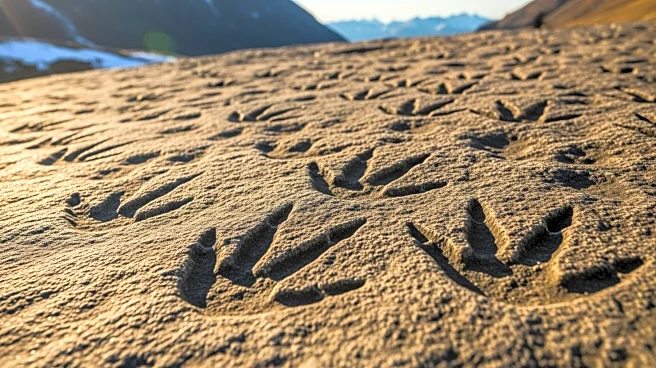
A wildlife photographer, Elio Della Ferrera, has uncovered one of the largest known collections of dinosaur footprints in the Stelvio National Park, Italy. The discovery, announced by officials, dates back approximately 210 million years to the Triassic
Period. Located near the 2026 Milan Cortina Winter Olympic venue of Bormio, the site contains an estimated 20,000 footprints spread over three miles. These tracks, found near the Swiss border, were made by long-necked bipedal herbivores similar to Plateosaurus, which were up to 33 feet long and weighed up to four tons. The footprints suggest that these dinosaurs traveled in packs and sometimes stopped in circular formations, possibly for protection. The location of the tracks, on a north-facing wall 7,900-9,200 feet above sea level, made them difficult to spot without a strong lens.
Why It's Important?
This discovery is significant as it provides valuable insights into the behavior and movement patterns of dinosaurs during the Late Triassic period. The sheer number of footprints and their preservation offer a rare glimpse into prehistoric life, contributing to the understanding of dinosaur ecology and evolution. The find also enhances the cultural and scientific value of the region, potentially boosting interest in paleontology and tourism. The proximity to the upcoming Winter Olympics venue adds a layer of intrigue, as it connects a major sporting event with a significant paleontological discovery, potentially drawing global attention to the area.
What's Next?
While the site is too remote to access during winter, plans for eventual public access could be developed, allowing for educational and tourism opportunities. The discovery may prompt further scientific exploration in the region, as researchers seek to uncover more about the prehistoric environment and the species that once inhabited it. Additionally, the find could inspire collaborations between paleontologists and local authorities to preserve and study the site, ensuring its protection and accessibility for future generations.
Beyond the Headlines
The discovery raises questions about the preservation of natural heritage sites and the balance between accessibility and conservation. As interest in the site grows, stakeholders will need to consider the ethical implications of tourism and research activities. The find also highlights the importance of interdisciplinary collaboration in uncovering and interpreting historical data, as well as the role of unexpected discoveries in advancing scientific knowledge.