


What's Happening?
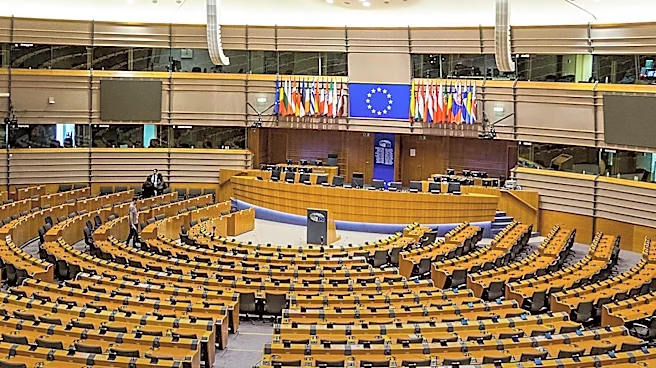
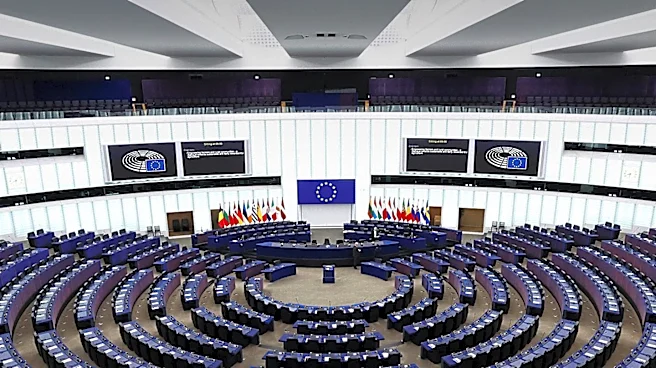
The Organization of African, Caribbean and Pacific States – European Union (OACPS-EU) Joint Parliamentary Assembly has convened in Brussels, Belgium, with a strong emphasis on strengthening multilateralism. The Deputy Speaker and Co-President of the OACPS-EU Joint Parliamentary Assembly,
Thomas Tayebwa, highlighted the necessity for future international cooperation to transcend mere rhetoric and instead be founded on genuine equality, mutual respect, and shared solidarity. Tayebwa outlined key economic and environmental priorities for the joint delegations, advocating for concrete economic and climate solutions and a restructured economic partnership designed to provide tangible local benefits to member states. He specifically stated, "The OACPS would like to see an economic partnership that delivers tangible benefits, including investment, local value addition, skills development and decent employment in our countries." The opening ceremony featured several distinguished speakers, including Nobel Peace Prize Laureate H.E. Jose Ramos-Horta, President of Timor-Leste, Roberta Metsola, President of the European Parliament, Andrew Holness, Prime Minister of Jamaica, and Younous Omarjee, Vice-President of the European Parliament, all of whom underscored the importance of international parliamentary dialogue in addressing complex global challenges.
Why It's Important?
This call for redefined global partnerships is significant as it reflects a growing recognition among international bodies of the need for more equitable and effective cooperation in a world facing increasing geopolitical tensions and shared challenges. The emphasis on moving beyond rhetoric to practical, mutually beneficial outcomes could reshape future international agreements and aid structures. For the U.S., while not directly a member of OACPS-EU, the outcomes of such discussions can influence global trade dynamics, climate policies, and international development frameworks, potentially impacting U.S. foreign policy and economic interests. A more stable and prosperous African, Caribbean, and Pacific region, fostered by these partnerships, could also present new opportunities for U.S. businesses and reduce the need for humanitarian aid. Conversely, if these partnerships fail to deliver, it could exacerbate global instabilities that eventually require U.S. intervention or resources. The focus on local value addition and skills development could also set new precedents for how developed nations engage with developing economies, potentially influencing U.S. development aid strategies.
What's Next?
The parliamentary sessions, co-chaired by Thomas Tayebwa and H.E. Francisco Assis, will continue with the stated goal of ensuring that negotiations yield practical outcomes for the nearly two billion citizens represented across the OACPS-EU member states. These discussions are expected to delve into specific proposals for economic and climate solutions, as well as the framework for a restructured economic partnership. The outcomes of these sessions could lead to new agreements or revised policies that will be implemented by the member states. The emphasis on tangible benefits suggests that future initiatives will be closely scrutinized for their real-world impact on investment, local value addition, skills development, and employment. The ongoing dialogue among parliamentarians from diverse regions is crucial for navigating complex global challenges and could set a precedent for how international bodies address shared issues in the coming years. The resolutions and recommendations from this assembly will likely influence policy-making within the OACPS and EU, potentially leading to new legislative actions or diplomatic efforts.
Beyond the Headlines
The OACPS-EU Joint Parliamentary Assembly's call for redefined global partnerships highlights a deeper shift in international relations, moving away from traditional donor-recipient models towards more equitable and solidarity-based cooperation. This evolution is particularly relevant in an era where the global South is asserting greater agency and demanding a more balanced distribution of power and resources. The emphasis on 'true equality' and 'mutual respect' challenges historical power imbalances and could lead to a more decentralized and multipolar global order. Ethically, this approach seeks to address long-standing grievances related to colonial legacies and unequal trade relationships. Legally, it could result in new international frameworks that prioritize sustainable development and climate justice, potentially influencing international law and human rights discourse. Culturally, such partnerships could foster greater understanding and collaboration between diverse regions, promoting a more inclusive global community. The long-term implications could include a re-evaluation of existing international institutions and a push for reforms that better reflect the current global landscape.