






What's Happening?
A 35-year study by scientists at the Cary Institute of Ecosystem Studies in Millbrook, New York, has uncovered surprising ecological connections influencing Lyme disease risk. The research challenges previous assumptions, finding that white-tailed deer
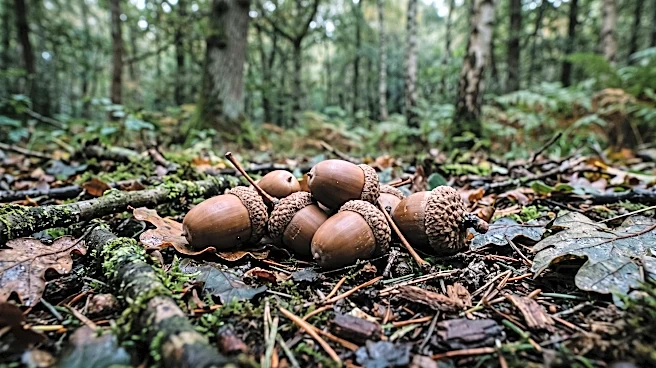
populations do not significantly correlate with nymphal tick abundance, which is responsible for most human Lyme disease transmissions. Instead, white-footed mouse populations are a much stronger predictor, with large mouse populations leading to approximately 40% more nymphal ticks the following year. A particularly unexpected discovery is the link between acorn production and tick populations. Years with abundant acorn crops (masting events) lead to increased mouse populations the subsequent year, which then supports a surge in nymphal ticks two years after the acorn mast. This finding provides a potential early warning system for Lyme disease exposure. The study also found that while mouse abundance predicts tick numbers, it doesn't consistently predict the percentage of infected ticks, as other animals like skunks and opossums can dilute the infection rate.
Why It's Important?
Lyme disease is a significant public health concern in the United States, with nearly 500,000 Americans diagnosed annually. This long-term study provides crucial insights that can revolutionize public health strategies for predicting and preventing the disease. By identifying acorns as a reliable two-year predictor of nymphal tick abundance, public health officials can potentially anticipate periods of higher risk well in advance. This allows for more targeted public awareness campaigns, preventative measures, and resource allocation in affected regions. The findings also shift focus from deer management to understanding the complex ecological interactions involving mice and oak trees, which could lead to more effective, ecologically informed interventions. For communities and healthcare providers in endemic areas, this predictive capability offers a valuable tool for proactive planning, potentially reducing the incidence of Lyme disease and its associated long-term health complications.
What's Next?
The findings from the Cary Institute study are expected to inform and refine Lyme disease prevention strategies across the U.S. Public health agencies may begin to incorporate acorn crop forecasts into their risk assessment models, issuing early warnings to communities. Further research will likely focus on refining these predictive models and exploring how climate change might alter these ecological relationships, as warmer conditions can affect both mouse populations and acorn production. Scientists will also continue to investigate the broader community of animals that ticks feed on to better understand the prevalence of infected ticks. The study emphasizes the value of long-term ecological research in understanding complex environmental health issues, suggesting that similar extended studies could yield breakthroughs for other vector-borne diseases.
Beyond the Headlines
This research highlights the intricate web of ecological dependencies that influence human health, demonstrating how seemingly unrelated natural phenomena, like acorn production, can have direct impacts on disease transmission. It underscores the importance of ecosystem health and biodiversity in regulating disease dynamics. The study also serves as a powerful example of how scientific assumptions, even widely held ones, can be overturned by rigorous, long-term data collection, emphasizing the need for continuous observation and critical re-evaluation in scientific inquiry. Ethically, this knowledge empowers communities to take more informed preventative actions, but it also places a responsibility on public health bodies to effectively communicate these complex ecological insights to the public. Long-term, understanding these natural predictors could lead to more sustainable and less interventionist approaches to disease management, focusing on ecological balance rather than broad-spectrum interventions.