





What's Happening?
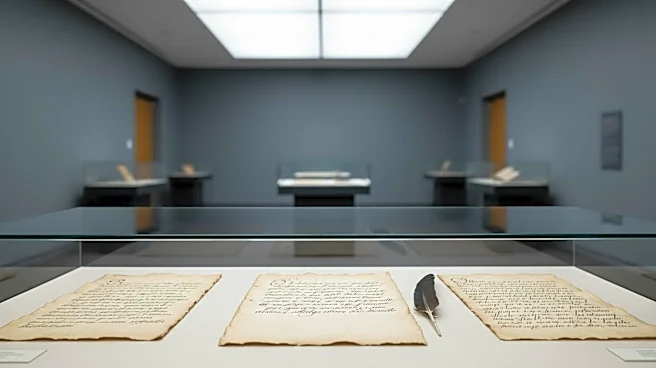
The J. Willard Marriott Library at the University of Utah has launched an exhibition titled 'America in the Archive: The Many Voices of Democracy' to commemorate the 250th anniversary of the Declaration of Independence. Curated by Rachel Ernst and Amanda
Hurtado, the exhibition explores American democracy through historical artifacts, tracing its evolution from pre-colonial Indigenous histories to contemporary social movements. The exhibition, which runs until September 9, features a rare facsimile of the Declaration of Independence, created from an engraved copper plate directly linked to the original document. The curators aim to present a nuanced view of American history, emphasizing the interconnectedness of individual stories and the broader national narrative. The exhibition includes artifacts such as Lewis and Clark expedition journals, Topaz War Relocation Center records, and Utah suffrage documents, highlighting both national and local historical contributions.
Why It's Important?
This exhibition is significant as it offers a comprehensive and inclusive perspective on American history, emphasizing the diverse voices and stories that have shaped the nation. By showcasing artifacts that connect national events with local experiences, the exhibition encourages visitors to reflect on the complex and multifaceted nature of U.S. history. It also highlights the role of individual contributions in the broader historical narrative, fostering a deeper understanding of the nation's past. The exhibition's approach to history as a collection of interconnected stories can inspire educational and cultural institutions to adopt similar methods, promoting a more inclusive and representative historical discourse.
What's Next?
The exhibition invites visitors to engage with the historical materials and contribute their own stories to the Marriott Library's Special Collections. This interactive element encourages public participation and helps fill gaps in the historical record, ensuring a more comprehensive archive for future generations. The exhibition's success could lead to similar initiatives at other institutions, promoting a broader understanding of history as a dynamic and inclusive narrative. Additionally, the exhibition's focus on individual stories may inspire further research and scholarship on underrepresented aspects of American history.
Beyond the Headlines
The exhibition's emphasis on interconnectedness and individual contributions highlights the ethical responsibility of historical institutions to represent diverse perspectives. By acknowledging gaps in the archive and inviting public contributions, the exhibition challenges traditional narratives and encourages a more inclusive approach to history. This approach can have long-term cultural implications, fostering a more nuanced understanding of national identity and promoting social cohesion. The exhibition also underscores the importance of preserving historical artifacts and narratives, ensuring that future generations have access to a rich and diverse historical record.