










What's Happening?
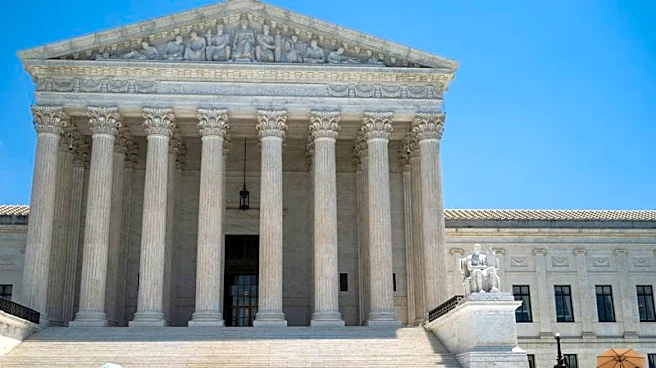
The U.S. Supreme Court has decided not to block a Texas law that mandates app store operators to verify the ages of smartphone users before allowing downloads. This decision follows a request from the Computer & Communications Industry Association, representing
major app store operators like Google and Apple, to vacate a ruling by the Fifth Circuit Court of Appeals that allowed the law to take effect. The law requires minors to link their app accounts to a parent or guardian, who must consent before they can download apps or make in-app purchases. The Supreme Court's decision allows the law to be enforced while legal challenges continue.
Why It's Important?
The enforcement of this law could have wide-ranging implications for digital privacy and the regulation of online content. It raises questions about the balance between protecting minors and preserving their rights to access information. The decision may influence other states considering similar laws, potentially leading to a fragmented regulatory landscape across the U.S. This could impact tech companies, which may need to adjust their compliance strategies to accommodate different state laws. The ruling also reflects the Supreme Court's current approach to digital rights and the extent of state power in regulating online activities.
What's Next?
As the law is enforced, ongoing legal challenges will continue to play out in lower courts. The outcome of these cases will be pivotal in determining the law's constitutionality and could set a precedent for future digital privacy regulations. Other states may monitor the situation closely, potentially influencing their own legislative efforts. The tech industry may also need to adapt to these changes, potentially affecting app development and distribution practices. The case could prompt discussions on federal regulations to create a more consistent approach to digital privacy and age verification across the country.