





What's Happening?
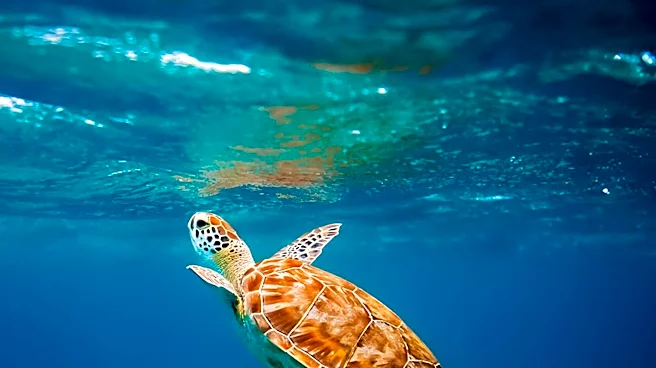
A 270-pound loggerhead sea turtle named Timmy was released back into the Atlantic Ocean at Fort Zachary Taylor Historic State Park in Key West, Florida, after undergoing weeks of rehabilitation. Hundreds of spectators gathered to witness the endangered
turtle's return to the wild. Turtle Hospital General Manager Bette Zirkelbach emphasized the importance of returning reproductive females like Timmy to the ocean for the survival of the species. The event highlighted the dedication of the caregivers who nursed Timmy back to health and the broader community's support for conservation efforts. Florida Rep. Jim Mooney, who attended the release, underscored the critical link between environmental education and the economic well-being of the Florida Keys, where tourism heavily relies on the region's natural environment and wildlife.
Why It's Important?
The successful rehabilitation and release of Timmy, a reproductive female loggerhead sea turtle, is significant for the conservation of an endangered species. Loggerhead sea turtles play a crucial role in marine ecosystems, and the return of a healthy, reproductive individual contributes directly to population stability. This event also serves as a powerful public awareness tool, inspiring compassion for wildlife and fostering a connection between people and conservation. The large turnout at Timmy's release demonstrates a growing public interest in environmental protection. Furthermore, Florida Rep. Jim Mooney's comments highlight the economic importance of environmental conservation, particularly in regions like the Florida Keys, where a healthy ecosystem is directly tied to the tourism industry, a major economic driver. Protecting these natural assets ensures both ecological balance and economic prosperity for local communities.
What's Next?
The continued monitoring of sea turtle populations and habitats will be crucial to assess the long-term impact of conservation efforts like Timmy's rehabilitation. Organizations like the Turtle Hospital will likely continue their work in rescuing, rehabilitating, and releasing injured or sick sea turtles, relying on public support and funding. Educational initiatives, as advocated by Florida Rep. Jim Mooney, are expected to intensify to ensure future generations understand the importance of environmental stewardship. This includes programs aimed at reducing human-caused threats to sea turtles, such as plastic pollution and habitat destruction. The success of Timmy's release may also encourage further legislative action and policy development to protect marine life and coastal environments, reinforcing the link between ecological health and economic sustainability in the Florida Keys and beyond.
Beyond the Headlines
The story of Timmy's release extends beyond a single event, touching upon deeper ethical and cultural dimensions of human-wildlife interaction. The public's emotional response and the large attendance at the release reflect a growing societal value placed on animal welfare and biodiversity. This collective compassion can translate into broader support for environmental policies and sustainable practices. Ethically, the rehabilitation of an endangered species like Timmy underscores humanity's responsibility to mitigate the impact of its activities on the natural world and to actively participate in restorative efforts. Culturally, such events reinforce the idea that humans are stewards of the environment, fostering a sense of connection and responsibility towards marine ecosystems. The economic argument presented by Rep. Mooney also highlights a pragmatic shift, where environmental protection is increasingly viewed not just as an ethical imperative but as a vital component of economic stability and growth, particularly for tourism-dependent regions.