







What's Happening?
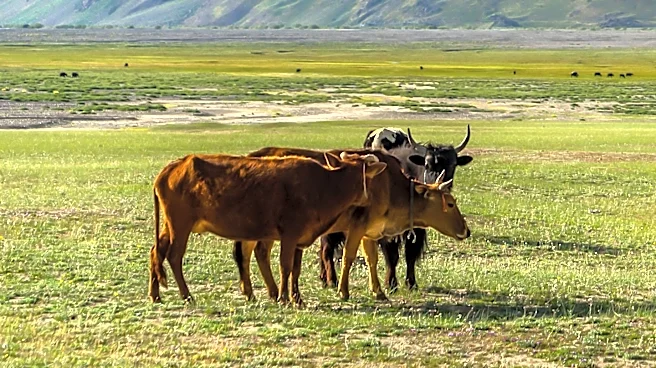
A coalition of environmental advocates, led by the Yellowstone to Uintas Connection, has filed a notice of intent to sue the U.S. Forest Service and the U.S. Fish and Wildlife Service. The lawsuit challenges the decision to allow cattle grazing on the Elk
Ridge complex within the Greater Yellowstone Ecosystem, an area known for conflicts with grizzly bears. The coalition argues that this decision violates the Endangered Species Act, as it expands cattle grazing into areas previously free of such conflicts due to the removal of sheep. The lawsuit is supported by several groups, including the Alliance for the Wild Rockies and the Native Ecosystems Council. The plaintiffs claim that the federal agencies failed to properly consult on the impact of this decision on the threatened grizzly bear population.
Why It's Important?
The decision to allow cattle grazing in grizzly bear habitats raises significant environmental and legal concerns. The potential increase in human-wildlife conflicts could lead to more grizzly bear deaths, impacting the species' recovery efforts. This legal challenge highlights the ongoing tension between agricultural interests and wildlife conservation in the U.S. The outcome of this lawsuit could set a precedent for how federal agencies balance these interests, potentially influencing future land use and wildlife management policies. Stakeholders such as ranchers, environmentalists, and government agencies are closely watching the case, as it could affect grazing rights and conservation strategies across the country.
What's Next?
The coalition has initiated the legal process by filing a notice of intent to sue, which requires a 60-day period for the federal agencies to respond or resolve the dispute before formal litigation can proceed. During this time, the agencies may attempt to address the coalition's concerns to avoid a court battle. If the case goes to court, it could lead to a reevaluation of the grazing permits and possibly stricter regulations to protect grizzly bears. The decision could also prompt other environmental groups to challenge similar land use decisions, potentially leading to broader changes in federal land management practices.