






What's Happening?
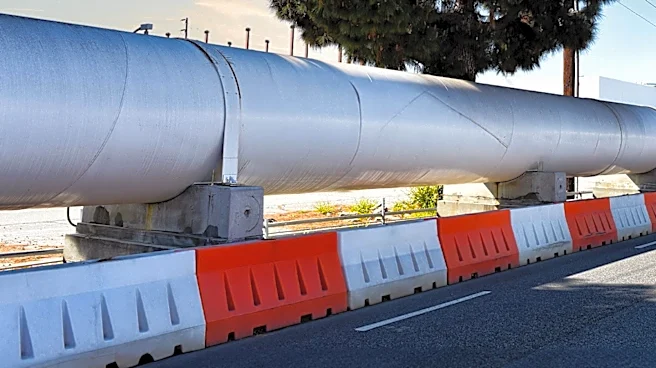
Huntsville Utilities and other local utility leaders are proposing a new 137-mile natural gas pipeline in North Alabama, stretching from north of Florence to Hollywood. The primary driver for this project is the increasing demand for natural gas in the region.
Currently, crews are conducting studies to determine the feasibility of a 200-foot corridor for the pipeline, a process that could take up to three years. Nearly 1,000 property owners have received letters requesting access for land surveys and testing to establish a 50-foot permanent easement. Joe Gehrdes of Huntsville Utilities stated that Huntsville and Athens are nearing their natural gas capacity, while Scottsboro has already reached its limit, necessitating this expansion.
Why It's Important?
This proposed pipeline is critical for addressing the escalating natural gas demand in North Alabama, which is experiencing rapid growth. Without this expansion, communities like Huntsville, Athens, and Scottsboro face potential energy shortages, impacting residential heating, industrial operations, and economic development. The project highlights the challenges of balancing energy needs with environmental and property owner concerns. Landowners, such as Seth Hubert, are concerned about the impact on their property and soil, indicating potential conflicts and legal challenges. The project's long timeline, with construction not yet scheduled, means years of uncertainty for affected property owners and could delay crucial energy infrastructure upgrades, potentially hindering regional growth and stability.
What's Next?
The immediate next steps involve continued route studies and land surveys, which are expected to last up to three years. During this period, Huntsville Utilities will engage with affected property owners, offering compensation for crops and other impacts. The utility emphasizes the urgency of the project, stating that planning must occur years in advance of actual need. Following the completion of the studies and securing necessary easements, a construction schedule will be established. This process will likely involve further public hearings and regulatory approvals, as the project navigates both local community concerns and broader energy infrastructure requirements. The outcome will significantly shape the energy landscape of North Alabama for decades.
Beyond the Headlines
This pipeline project underscores the broader national debate on energy infrastructure, economic growth, and environmental stewardship. While natural gas is often seen as a cleaner alternative to other fossil fuels, its extraction and transportation still raise environmental concerns, particularly regarding land use and potential ecological impacts. The project's necessity, driven by population and industrial growth, highlights the complex trade-offs involved in energy policy. It also brings to light the eminent domain issues and property rights debates that often accompany large-scale infrastructure projects, potentially leading to legal precedents or new frameworks for landowner compensation and engagement. The long-term implications could include increased reliance on natural gas in the region, influencing future energy diversification strategies and climate goals.