
What's Happening?
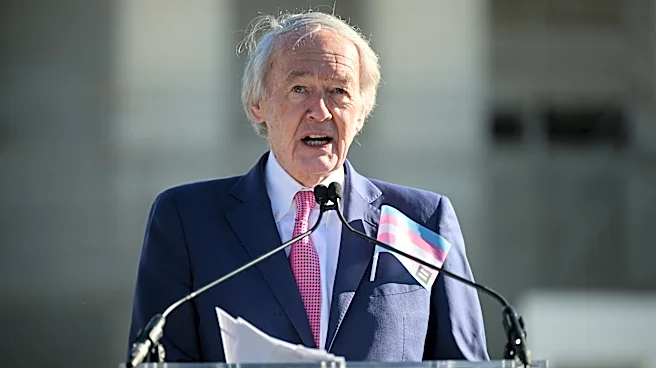
Senator Ed Markey has won the Democratic nomination for U.S. Senate in Massachusetts, successfully fending off a challenge from Representative Seth Moulton, according to a race call by The Associated Press.
This victory marks another win for the progressive wing of the Democratic Party. Markey, who turned 80 in July and first became a Congressman in 1976, campaigned on his long-standing commitment to progressive ideals, including support for 'Medicare for All,' opposition to President Trump's defense budget, and raising taxes on the wealthy. His campaign emphasized his active role in fighting against President Trump's agenda. The primary race also highlighted generational divides within the party, with Moulton, who entered politics in 2014, advocating for new leadership. During an August debate, Markey accused Moulton of not adequately supporting transgender rights, referencing Moulton's 2024 comments about not wanting his daughters to be 'run over on a playing field by a male or formerly male athlete.' Moulton later apologized for these comments and affirmed his support for LGBTQ rights. This is Markey's second primary win against a younger challenger, having defeated Representative Joe Kennedy III in 2020.
Why It's Important?
Senator Markey's primary victory is significant as it reinforces the strength of the progressive movement within the Democratic Party, particularly in a state like Massachusetts. His win demonstrates that voters are prioritizing a candidate's progressive stance and policy positions over concerns about age, even when faced with calls for generational change. This outcome could influence future Democratic primary strategies, suggesting that a consistent progressive record can be a powerful asset for incumbents. The debate over transgender rights during the campaign also highlights the ongoing internal discussions within the Democratic Party regarding LGBTQ+ issues and how candidates articulate their support. Markey's success in repelling a well-known challenger like Moulton indicates a strong base of support for his specific brand of progressive politics and his opposition to President Trump's policies. His continued presence in the Senate would mean a consistent voice for 'Medicare for All' and other progressive legislative priorities.
What's Next?
Following his primary win, Senator Ed Markey will now face attorney John Deaton in the November general election for the U.S. Senate seat in Massachusetts. Given Massachusetts' strong Democratic leanings, Markey is considered heavily favored to win the general election. His campaign will likely continue to focus on his progressive platform and his role in opposing President Trump's agenda. The general election will serve as a further test of the electorate's priorities, though the outcome in 'deep blue Massachusetts' is largely anticipated. Markey's victory in the primary suggests that his established progressive credentials and long tenure in public service resonate strongly with the state's Democratic voters, positioning him well for the upcoming contest against his Republican challenger.
Beyond the Headlines
Senator Markey's repeated success against younger challengers, first against Joe Kennedy III and now Seth Moulton, points to a broader trend within the Democratic Party where experience and a consistent progressive ideology can outweigh arguments for generational change. This dynamic suggests that while there is a desire for new voices, the party's base in certain states values established progressive leadership. The debate surrounding transgender rights also underscores the evolving social and political landscape, where past comments on sensitive issues can become central to campaigns. This highlights the increasing scrutiny on candidates' stances on identity politics and social justice, reflecting a shift in what constitutes acceptable discourse within the party. Markey's ability to leverage his long-standing progressive record to connect with voters, despite his age, indicates a potential blueprint for other long-serving progressive politicians.