




What's Happening?
The Philippine National Police (PNP) has called on the public to exercise discipline and cooperate with traffic authorities as the country hosts the Association of Southeast Asian Nations (ASEAN) Summit. In a statement released on Tuesday, November 10,
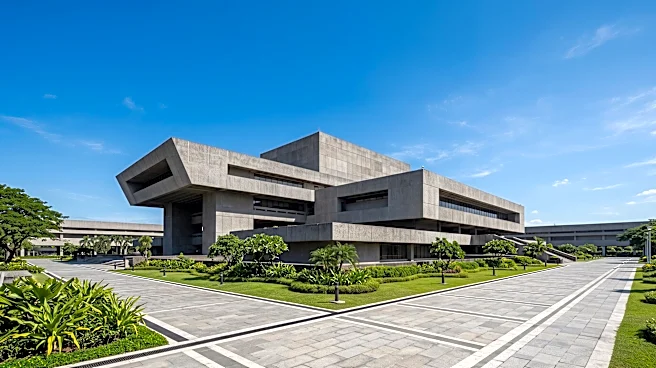
2026, PNP chief General Jose Melencio Nartatez Jr. assured citizens that police personnel would be deployed to manage road congestion and ensure motorist safety. Traffic restrictions and security measures are being implemented for the ASEAN Summit and its related events. The PNP’s Highway Patrol Group (HPG) will collaborate with the Metropolitan Manila Development Authority (MMDA) to enforce traffic rules and assist motorists affected by the congestion, in addition to their security duties at Summit venues. General Nartatez emphasized the PNP's commitment to easing traffic delays through strict implementation of traffic management protocols. The MMDA previously stated that while there would be no full road closures, a security exclusion zone would be established around the Philippine International Convention Center (PICC), and a stop-and-go scheme would be in effect along designated routes from November 15 to 18.
Why It's Important?
This call for public cooperation is crucial for the successful hosting of a major international event like the ASEAN Summit, which brings together leaders and delegates from across Southeast Asia. Efficient traffic management and robust security measures are vital to ensure the smooth flow of official delegations and the safety of all participants, reflecting positively on the host nation's organizational capabilities. Disruptions caused by traffic congestion could impede the timely arrival of delegates, potentially affecting the summit's schedule and productivity. Furthermore, the implementation of security zones and traffic schemes highlights the significant logistical challenges involved in hosting such an event, requiring extensive coordination between various government agencies. The public's adherence to these measures is essential not only for operational efficiency but also for projecting an image of order and hospitality, which can have long-term implications for the Philippines' standing as a capable host for future international gatherings. The success of these arrangements can also influence public perception of government effectiveness in managing large-scale events.
What's Next?
The public is advised to plan their trips in advance, monitor traffic conditions, and prepare for potential rerouting during the ASEAN Summit, particularly between November 15 and 18, 2026. The PNP chief urged motorists to follow traffic rules and cooperate with authorities to prevent road incidents. The National Capital Region Police Office (NCRPO) acting director Brigadier General Christopher Abrahano confirmed that police personnel are deployed to guide and assist motorists and commuters, especially with the temporary conversion of designated bus lanes into ASEAN lanes for official vehicles and delegations, and the implementation of road closures and rerouting around the PICC and Cultural Center of the Philippines Complex. Personnel have been reminded to remain courteous and professional while enforcing these temporary measures. The success of these traffic and security protocols will be closely observed as the summit progresses, with potential adjustments made based on real-time conditions and feedback.
Beyond the Headlines
The logistical challenges associated with hosting a major international summit like ASEAN extend beyond immediate traffic management to broader issues of urban planning and public infrastructure. The recurring need for significant traffic interventions during such events underscores the persistent issue of urban congestion in metropolitan areas like Manila. While temporary measures are necessary for the summit, they also highlight the long-term need for sustainable solutions to improve urban mobility and reduce the daily burden on commuters. The public's response to these temporary restrictions can also serve as an indicator of civic engagement and collective responsibility in supporting national endeavors. Moreover, the emphasis on security and smooth operations for international delegates implicitly prioritizes diplomatic and economic objectives, potentially at the temporary expense of local daily routines. This balance between national image and local impact is a constant consideration for host cities of global events.