







What's Happening?
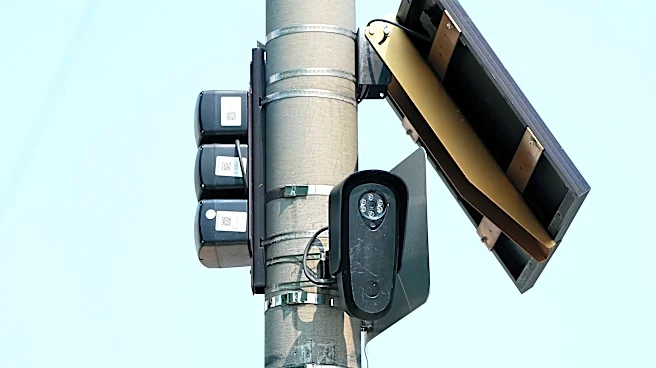
Lawmakers from both Republican and Democratic parties are raising alarms over the proliferation and increasing sophistication of AI-powered automatic license plate reader (ALPR) cameras, particularly those from companies like Flock Safety. Concerns center
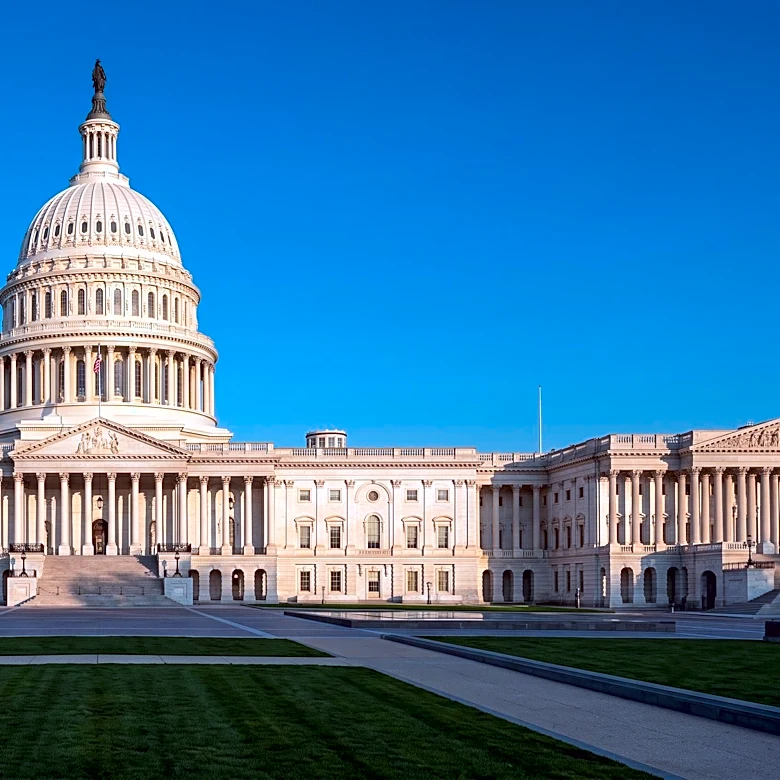
on privacy violations and the potential for these devices to create a mass surveillance state. Representative Greg Steube (R-Fla.) stated that law enforcement monitoring citizens' movements is wrong, likening it to an 'Orwellian society.' He cited an incident in his district where a former Sarasota police officer was fired for misusing Flock camera technology to spy on a single license plate over 300 times. Representative Keith Self (R-Texas) highlighted that AI has advanced these cameras beyond simple license plate reading, enabling facial recognition and interior vehicle monitoring. Representative Delia Ramirez (D-Ill.) criticized private tech companies for profiting from mass surveillance, calling it a threat to democracy and civil liberties. Several lawmakers, including Steube, Self, Tim Burchett (R-Tenn.), and Thomas Massie (R-Ky.), are pushing for legislative limits or outright bans on these cameras, with Steube considering national-level legislation and threatening to withhold federal funding from Sarasota officials without 'reasonable restrictions.'
Why It's Important?
The bipartisan concern over AI-powered ALPR cameras signifies a growing national debate about privacy rights in the age of advanced surveillance technology. The technology's ability to collect and analyze vast amounts of vehicle and location data without consent raises fundamental questions about Fourth Amendment protections against unreasonable searches and seizures. The potential for misuse, as demonstrated by the Sarasota incident, underscores the need for robust legal frameworks and accountability mechanisms. If left unchecked, critics argue, these cameras could lead to a pervasive surveillance state, eroding civil liberties and fostering a climate of constant monitoring. Conversely, proponents argue that ALPRs are vital tools for public safety, aiding in crime solving and emergency response. The legislative pushback reflects a societal struggle to balance security needs with individual privacy, with potential implications for how law enforcement operates, how technology companies develop and deploy surveillance tools, and the future of digital rights in the U.S.
What's Next?
The debate is expected to intensify, with more legislative proposals likely to emerge at both federal and local levels. Representative Steube is actively considering filing national legislation, and other lawmakers are pushing their own bills to address the issue. Local governments, such as Tempe, Arizona, have already begun taking action, with some shutting down their Flock camera systems. Flock Safety, in response to public backlash, has introduced new privacy and accountability safeguards, including reducing default data retention and requiring misuse detection. However, these measures may not be sufficient to quell legislative concerns. The issue is also becoming a point of contention in political campaigns, indicating it will remain a prominent topic. Future developments will likely involve ongoing legal challenges, further technological advancements in ALPR capabilities, and continued efforts by privacy advocates to push for stricter regulations or outright bans on mass surveillance technologies.
Beyond the Headlines
The controversy surrounding AI-powered ALPR cameras delves into profound ethical and philosophical questions about the nature of privacy in a technologically advanced society. The shift from targeted surveillance to mass data collection on ordinary citizens without suspicion challenges traditional notions of individual liberty and the role of government. The 'Orwellian' comparisons highlight fears of a society where every movement is tracked and recorded, potentially leading to chilling effects on free association and expression. Furthermore, the involvement of private companies like Flock Safety in providing these surveillance tools raises questions about data ownership, commercial exploitation of personal information, and the potential for private entities to become extensions of state surveillance. This debate is not just about cameras; it's about defining the boundaries of state power, corporate responsibility, and individual autonomy in an increasingly digitized world, setting precedents for future AI-driven technologies that could further blur the lines between public safety and private life.