



What's Happening?
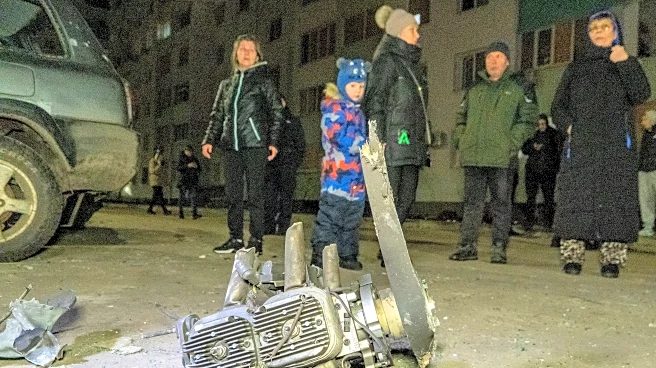
A recent Russian missile strike on a residential building in Kharkiv, Ukraine's second-largest city, resulted in the deaths of at least 10 people, including two children. The attack, which targeted a five-story apartment block, caused significant structural
damage, trapping residents under the rubble. Ukrainian President Volodymyr Zelensky condemned the attack and called for an international response, highlighting the ongoing threat to civilian and energy infrastructure. The strike was part of a larger overnight assault involving 29 missiles and 480 drones aimed at various regions, including Kyiv. Ukrainian air defense systems managed to intercept a significant number of these threats, but the damage was still extensive.
Why It's Important?
The attack underscores the ongoing volatility and humanitarian crisis in Ukraine, as civilian areas continue to be targeted. The use of advanced missile technology by Russia raises concerns about the escalation of military tactics and the potential for increased civilian casualties. This development could influence international diplomatic efforts and pressure on Russia, as well as impact global energy markets due to the targeting of energy infrastructure. The situation also highlights the resilience and strategic capabilities of Ukrainian defense systems, which have been bolstered by international support.
What's Next?
The international community is likely to respond with increased diplomatic pressure on Russia, potentially leading to further sanctions or military support for Ukraine. The Ukrainian government may seek additional aid to strengthen its air defense systems and protect critical infrastructure. The attack could also influence ongoing peace negotiations, with Ukraine leveraging its recent battlefield successes to gain a stronger position at the negotiating table. The potential for a spring offensive by Russian forces in the Kharkiv region remains a concern, as indicated by recent military movements.