




What's Happening?
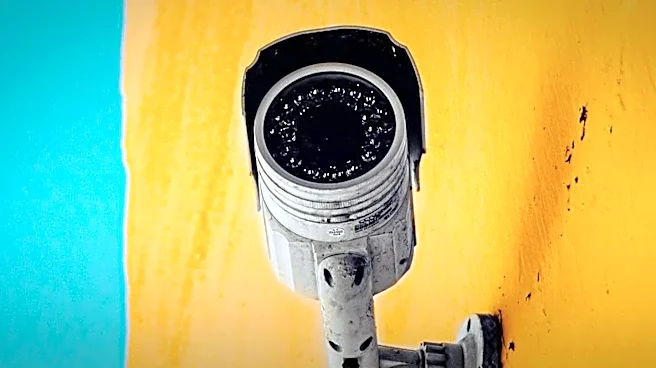
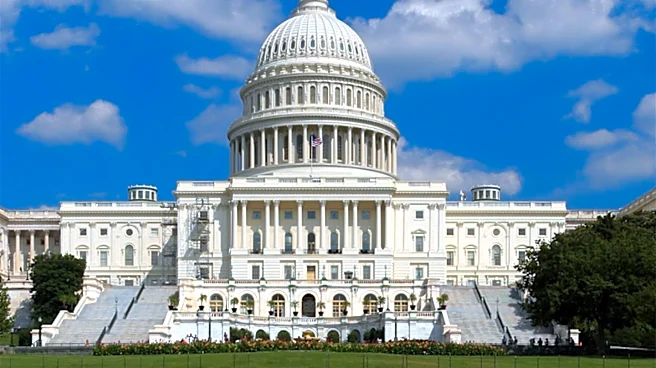
U.S. Representatives Thomas Massie (R-Kentucky) and Eric Burlison (R-Missouri) have introduced the bipartisan 'Flock-Off Act' on September 2. This proposed legislation aims to prohibit the use of federal funds for the purchase, installation, operation,
maintenance, or upgrade of networked automated license plate readers (ALPRs) and biometric surveillance cameras. The bill also extends to associated databases and data-sharing systems. This initiative comes amidst growing backlash against companies like Flock Safety, which provide these surveillance technologies, and follows increasing concerns over privacy and potential misuse by law enforcement. The Security Industry Association (SIA) has defended the use of ALPRs but advocates for stronger privacy safeguards, restrictions on data sharing, regular audits, and penalties for misuse, while opposing warrant requirements for database searches.
Why It's Important?
The introduction of the 'Flock-Off Act' signifies a growing bipartisan concern in the U.S. Congress regarding privacy rights and the potential for mass surveillance through technologies like networked ALPRs and biometric cameras. This legislation directly challenges the expanding use of these systems by state and local governments, which often rely on federal funding. If passed, the act could significantly curtail the proliferation of such surveillance networks, impacting both law enforcement agencies that utilize them and the technology companies that supply them. The debate highlights a fundamental tension between public safety and individual civil liberties, particularly the Fourth Amendment's protection against unreasonable searches. The bill's focus on federal funding could force a reevaluation of how surveillance technologies are acquired and deployed across the nation, potentially leading to a more fragmented and less interconnected surveillance landscape, or conversely, pushing states to find alternative funding sources if they wish to continue using these systems.
What's Next?
The 'Flock-Off Act' will proceed through the legislative process, where it will likely face debate and potential amendments in Congress. Its bipartisan nature suggests it may garner significant support, but it could also encounter opposition from law enforcement advocates and the security industry, who argue for the effectiveness of these tools in crime prevention and investigation. The bill's progress will be closely watched by civil liberties organizations, privacy advocates, and technology companies. Should the act pass, it would necessitate a shift in funding strategies for state and local law enforcement agencies currently relying on federal grants for surveillance technology. Even if it does not pass, the introduction of such legislation signals increasing scrutiny of surveillance practices, potentially leading to more stringent regulations, audits, and privacy safeguards at both federal and state levels, as seen with recent actions by governors and state agencies to limit ALPR use.
Beyond the Headlines
The 'Flock-Off Act' delves into the deeper societal implications of pervasive surveillance technology, particularly the erosion of privacy in public spaces and the potential for 'pattern of life' tracking. The debate extends beyond individual privacy to questions of algorithmic bias, data security, and the potential for misuse, as evidenced by recent cases of law enforcement personnel abusing ALPR systems for personal reasons. This legislation reflects a growing public and political awareness of how seemingly innocuous technologies can, when networked and combined with other data, create comprehensive digital profiles of individuals. The outcome of this legislative effort could set a precedent for how the U.S. government balances technological advancement with fundamental rights, influencing future policies on artificial intelligence, biometric data collection, and the broader digital rights landscape. It also highlights the ongoing challenge of adapting constitutional protections to rapidly evolving technological capabilities.