







What's Happening?
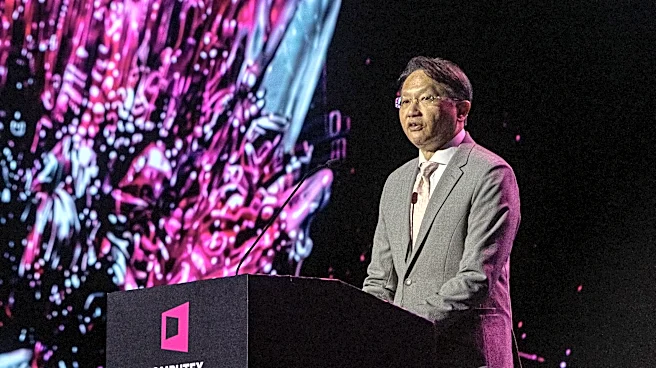
Josephine Teo, Singapore’s Minister for Digital Development and Information, has outlined Singapore's pragmatic approach to artificial intelligence (AI), emphasizing its role in overcoming the nation's land and manpower constraints. Speaking at the Family
Business Summit in Hong Kong, co-organized by the South China Morning Post and Blue Pool Capital, Minister Teo highlighted that while AI presents opportunities, it also carries risks such as job displacement and cyberthreats. She noted that AI is advancing at a pace faster than societies can adapt, potentially creating a 'broken rung' on the career ladder for younger workers. Businesses are increasingly shifting wage spending towards AI technology, further exacerbating these concerns. Singapore aims to leverage AI to gain an advantage without becoming overly dependent on any single power or AI provider, focusing on a pragmatic implementation strategy.
Why It's Important?
Minister Teo's remarks underscore a critical global challenge: balancing the economic benefits of AI with its potential societal disruptions. For the U.S., Singapore's pragmatic approach offers a case study in navigating the complexities of AI adoption. As U.S. industries also grapple with automation and its impact on the workforce, Singapore's strategy of turning constraints into motivators for AI integration could inform policy discussions. The 'broken rung' phenomenon, where AI displaces entry-level jobs, is a concern that resonates in the U.S. labor market, potentially leading to increased demand for reskilling and upskilling programs. Businesses in the U.S. are similarly evaluating the cost-benefit of AI investments versus traditional labor, which could influence employment trends and economic growth. The emphasis on avoiding over-reliance on a single AI provider also highlights the importance of a diversified and secure AI ecosystem, a relevant consideration for U.S. national security and technological independence.
What's Next?
Singapore is expected to continue developing and implementing its pragmatic AI policies, potentially serving as a model for other nations. The focus will likely be on fostering innovation while simultaneously addressing the social and economic implications of AI, such as job displacement and the need for workforce adaptation. This could involve further investments in education and training programs to equip workers with AI-relevant skills. Businesses in Singapore may accelerate their adoption of AI, leading to increased productivity but also continued pressure on traditional employment structures. Internationally, discussions around AI governance and ethical deployment are likely to intensify, with Singapore's experience contributing to these global dialogues. The U.S. and other developed economies will be closely observing Singapore's progress in managing these challenges, potentially drawing lessons for their own AI strategies and regulatory frameworks.
Beyond the Headlines
The deeper implications of Minister Teo's statements touch upon the evolving social contract between technology, government, and citizens. The idea of a 'broken rung' on the career ladder due to AI suggests a fundamental shift in how future generations will enter and progress in the workforce. This raises ethical questions about equitable access to opportunities and the responsibility of governments and corporations to mitigate negative impacts. Culturally, the rapid advancement of AI challenges traditional notions of work, skill, and human value, potentially leading to societal anxieties and demands for new forms of social safety nets. Legally, the increasing reliance on AI could necessitate new regulatory frameworks to address issues like algorithmic bias, data privacy, and accountability for AI-driven decisions. Singapore's proactive stance in confronting these issues reflects a broader global trend towards integrating AI into national strategies while attempting to manage its profound transformative effects.