




What's Happening?
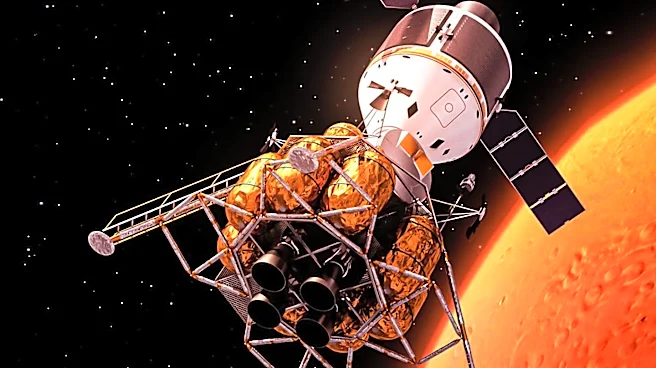
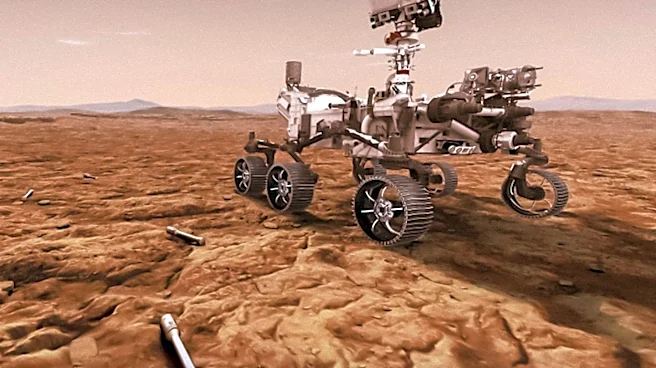
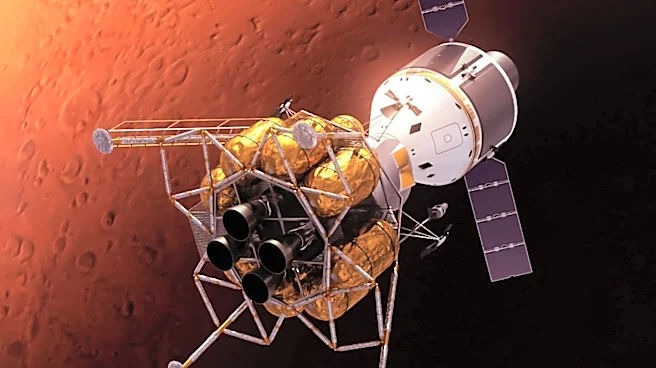
K2 Space, a company founded by two brothers, is actively developing massive satellites powered by krypton plasma. These satellites are designed with ambitious goals, including serving as orbital data centers and facilitating numerous missions to Mars
and beyond. The company's innovative approach focuses on building large-scale satellite technology that can support extensive deep space exploration. This development signifies a push towards more advanced and capable spacecraft for future interplanetary endeavors. The use of krypton plasma as a power source indicates a focus on efficient and powerful propulsion systems for long-duration space travel.
Why It's Important?
The development of giant satellites by K2 Space is significant for the future of U.S. space exploration and the broader space industry. These advanced satellites could enable more ambitious and frequent missions to Mars and other deep space destinations, potentially accelerating scientific discovery and resource utilization beyond Earth. The concept of orbital data centers could revolutionize how data is processed and stored in space, supporting complex missions and potentially creating new commercial opportunities. The use of krypton plasma propulsion could offer greater efficiency and speed for spacecraft, reducing travel times and increasing payload capacities for deep space missions. This technological advancement could position the U.S. at the forefront of next-generation space infrastructure and exploration capabilities.
What's Next?
K2 Space's ongoing development suggests a future where larger, more powerful satellites become standard for deep space missions. The company's ambitions point towards a potential increase in the frequency and scope of missions to Mars and other celestial bodies. Further testing and deployment of these krypton plasma-powered satellites will be crucial to validate their capabilities for orbital data centers and interplanetary travel. Success in these areas could lead to increased investment in similar technologies and a shift in how space missions are conceived and executed. The broader space industry will likely watch K2 Space's progress closely, as their innovations could influence future satellite design and propulsion systems.
Beyond the Headlines
The emergence of companies like K2 Space highlights a growing trend of private sector innovation driving advancements in space technology, traditionally dominated by government agencies. This shift could lead to more rapid development cycles and potentially lower costs for space exploration. The vision of orbital data centers also raises questions about data sovereignty and security in space, as well as the environmental impact of deploying and maintaining such large-scale infrastructure. Furthermore, the capability for 'hundreds of missions to Mars' suggests a future where human presence and activity on other planets could become more routine, prompting discussions about planetary protection, resource ownership, and the long-term implications of extraterrestrial colonization.