



What's Happening?
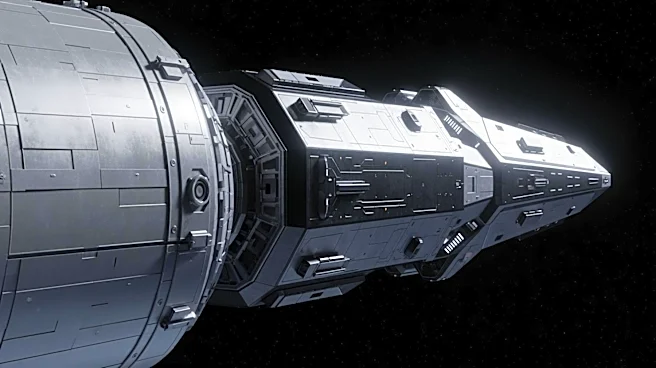
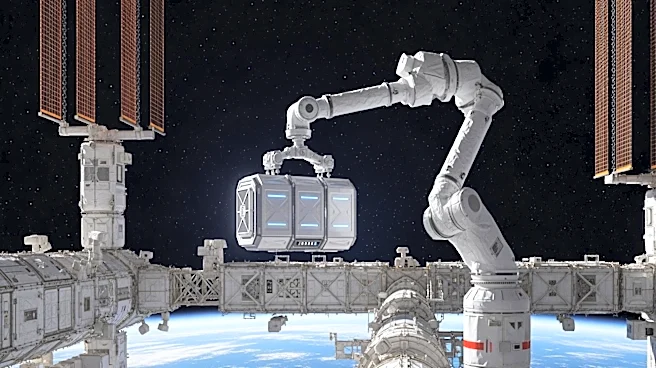
The Expedition 74 crew aboard the International Space Station (ISS) has begun unloading the Cygnus XL cargo spacecraft, which was recently captured and installed using the Canadarm2 robotic arm. The Cygnus XL delivered over 11,000 pounds of new science
experiments, lab hardware, and crew supplies. NASA flight engineers Chris Williams and Jack Hathaway, along with Jessica Meir and Sophie Adenot, are transferring time-critical research samples for preservation. The cargo includes research hardware for studying blood stem cells, astronaut gut health, and pharmaceutical production, as well as an advanced exercise system and new eye-imaging hardware.
Why It's Important?
The successful delivery and unloading of the Cygnus XL cargo spacecraft are crucial for the continued operation and research activities aboard the ISS. The new science experiments and hardware will enable the crew to conduct cutting-edge research in various fields, including cancer treatment, gut health, and quantum physics. These experiments have the potential to advance scientific knowledge and lead to new medical and technological breakthroughs. The mission also highlights the importance of international collaboration in space exploration, with contributions from both NASA and the European Space Agency.
What's Next?
The Expedition 74 crew will continue to unpack and set up the new experiments and hardware delivered by Cygnus XL. The research conducted aboard the ISS will provide valuable insights into human health and the effects of long-duration spaceflight, which are essential for future missions to the Moon and Mars. The crew will also prepare for the departure of the Roscosmos Progress 93 resupply ship, which has been docked to the ISS for seven months. The ongoing activities aboard the ISS demonstrate the station's role as a vital platform for international scientific collaboration and exploration.