








What's Happening?
Omer Bartov, a historian specializing in the Holocaust and genocide at Brown University, has discussed the ongoing Israel-Hamas conflict, particularly focusing on the allegations of genocide in Gaza. Bartov, who served in the Israel Defense Force (IDF),
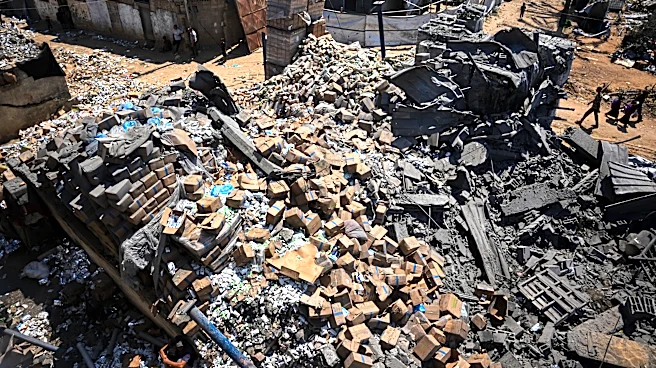
initially warned in October 2023 of potential war crimes and crimes against humanity in Gaza. By May 2024, he concluded that Israel was committing genocide, citing the systematic destruction of infrastructure and the displacement of the Gazan population. He points to statements by Israeli officials, such as then-Defense Minister Yoav Gallant's remarks about 'human animals' and Prime Minister Netanyahu's invocation of Amalek, as evidence of intent to destroy the group. Bartov argues that the IDF's operational patterns, including pushing the population south and rendering Gaza uninhabitable, align with the UN Convention's definition of genocide, which includes creating conditions that prevent a group's survival. He also highlights the Israeli public's widespread denial of these actions.
Why It's Important?
Bartov's analysis is significant as it comes from a scholar of genocide and a former IDF soldier, offering a perspective that challenges prevailing narratives. His assertion that Israel's actions in Gaza constitute genocide, based on the UN Convention of 1948, carries substantial weight in international discourse. If widely accepted, such a classification could trigger legal and diplomatic obligations for signatory nations, including the U.S., to intervene. The U.S. has historically provided significant military, economic, and diplomatic support to Israel, including veto power in the UN Security Council. Bartov suggests that U.S. pressure could have halted Israeli actions, implying U.S. complicity. This perspective could intensify calls for American Jews and the U.S. government to re-evaluate their stance and potentially pressure Israel towards a different approach, aiming for coexistence rather than conflict. The discussion also underscores the profound impact of historical narratives, particularly the Holocaust, on Israeli self-perception and its justification of military actions.
What's Next?
Bartov suggests that a reckoning with the events in Gaza will not occur without massive external pressure. He advises American Jews to pressure the U.S. government and their representatives to 'rein Israel in' and help it reform into a society that seeks coexistence between Jews and Palestinians. He proposes a blueprint for peace, 'A Land for All,' which envisions two states, Israel and Palestine, largely along 1967 lines, with open borders and a distinction between citizenship and residency. This model, developed by Israeli Jews and Palestinians, aims to address the intertwined nature of the region and the strong connections people have to the land. While acknowledging that such plans may not seem realistic currently, Bartov emphasizes the importance of having a blueprint for alternatives to the current situation, believing that circumstances can change and a void needs to be filled with constructive solutions.
Beyond the Headlines
Bartov's insights delve into the deeper psychological and societal implications of the conflict. He draws parallels between the denial of war crimes in the German army during World War II and the current denial within Israeli society regarding actions in Gaza. He notes that the widespread involvement of Israeli citizens in the IDF makes it difficult for society to acknowledge potential wrongdoing, as it implicates their own children and family members. The historian also highlights how the Holocaust is invoked in Israeli politics to legitimize violence and warp the understanding of reality, portraying adversaries like Hamas as an existential threat akin to Nazis, despite significant differences. This historical framing, he argues, provides a 'license for Israeli violence' and prevents a critical self-assessment. The degradation of Israel's legal and political systems, and the increase in violence against Palestinian citizens, are presented as consequences of this denial, suggesting a long-term erosion of societal values.