








What's Happening?
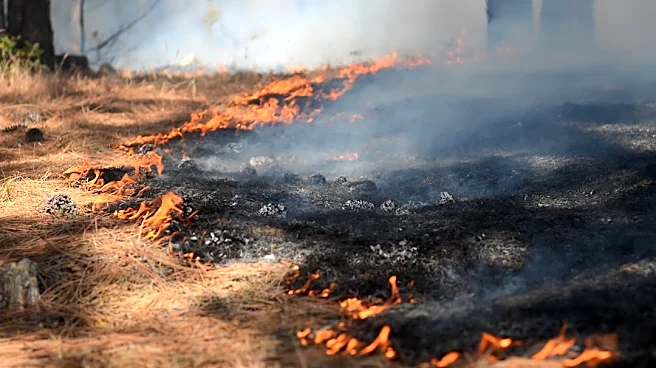
A wildfire, named the Burnett Gulch fire, is burning a few miles north of Lyons in Larimer County, Colorado, prompting voluntary evacuations for residents in the area. As of Monday afternoon, the fire was estimated to be 2.8 acres, a reduction from an
earlier estimate of 3.4 acres. Firefighting crews have achieved 20% containment on the blaze. Voluntary evacuation orders are specifically in place for residents living along Lonestar Road and Stagecoach Trail in Larimer County. Officials are advising these residents to gather essential items and be prepared for a potential mandatory evacuation if conditions worsen. Firefighters are actively on the scene, and air resources have been deployed to combat the fire. The U.S. Forest Service reported that crews are making progress on establishing a handline around the fire. A map of the fire's footprint indicates it is burning in the foothills between Carter Lake Reservoir and Lyons.
Why It's Important?
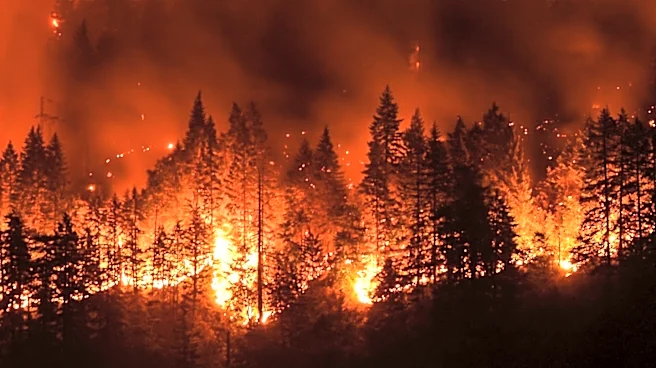
This wildfire is important due to the immediate threat it poses to residential areas and natural resources in Larimer County. Wildfires in Colorado's foothills are a recurring concern, often exacerbated by dry conditions and strong winds, making rapid containment crucial. The issuance of voluntary evacuations highlights the potential for the fire to escalate, underscoring the importance of preparedness for residents in fire-prone regions. The deployment of both ground crews and air resources demonstrates the significant effort and coordination required from multiple agencies to manage such incidents. Furthermore, the fire's proximity to residential areas and natural landscapes emphasizes the ongoing challenge of balancing urban development with environmental conservation, particularly in the wildland-urban interface. This event serves as a critical reminder of the need for effective wildfire management strategies and public awareness regarding fire safety.
What's Next?
Firefighting efforts will continue to focus on increasing containment of the Burnett Gulch fire. Crews will work to strengthen the handline and utilize air resources to suppress the blaze. Authorities will closely monitor weather conditions, including wind patterns and humidity, as these factors significantly influence fire behavior. The voluntary evacuation orders for residents along Lonestar Road and Stagecoach Trail will remain in effect until the fire is deemed sufficiently contained and the threat to homes is mitigated. Officials will provide regular updates to the public regarding the fire's status and any changes to evacuation orders. Depending on the fire's progression, mandatory evacuations could be issued. Post-containment, fire investigators will likely determine the cause of the blaze, which could lead to preventative measures or legal actions if human activity is found to be responsible.
Beyond the Headlines
Beyond the immediate firefighting efforts, the Burnett Gulch wildfire highlights the broader implications of climate change and increasing population density in fire-prone regions. Colorado, like many western states, faces a growing risk of more frequent and intense wildfires due to prolonged droughts and warmer temperatures. This incident underscores the critical need for long-term strategies in wildfire prevention, including forest management, controlled burns, and community-level mitigation efforts such as defensible space around homes. The repeated occurrence of such fires also places a significant strain on emergency services and state budgets. Furthermore, the psychological impact on residents living in areas prone to wildfires, who face constant uncertainty and the threat of displacement, is substantial. Addressing these deeper issues requires a comprehensive approach involving federal, state, and local governments, as well as active community participation in building resilience against future fire seasons.