




What's Happening?
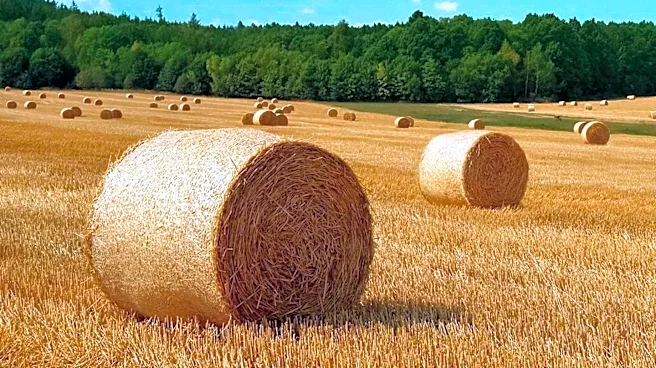
U.S. Rep. Julie Fedorchak (R-ND) announced that the U.S. Department of Agriculture (USDA) will allow North Dakota farmers and ranchers facing severe drought to request extensions beyond the standard 15-day period for removing hay bales from Conservation
Reserve Program (CRP) lands. This decision comes after Rep. Fedorchak met with producers at Kuhn Farms near Dickinson, North Dakota, where concerns were raised about the impact of drought conditions and the restrictive federal emergency haying rules, particularly the 15-day deadline. She advocated for a 30-day removal period and greater authority for local Farm Service Agency (FSA) leaders to determine appropriate timelines based on local conditions. The USDA confirmed that producers can now contact their local county FSA office to request additional time. Rep. Fedorchak emphasized that the 15-day timeline, established in Washington, often does not align with on-the-ground realities for farmers during harvest, especially when dealing with drought-induced forage shortages.
Why It's Important?
This increased flexibility is crucial for North Dakota's agricultural sector, which is currently grappling with severe drought conditions. The ability to extend the hay bale removal period from CRP lands directly addresses a critical need for livestock feed, helping farmers and ranchers mitigate the economic impact of reduced forage supplies. The previous 15-day limit was seen as an arbitrary federal deadline that added unnecessary pressure during harvest, a time when producers are already facing challenges such as low commodity prices, high input costs, and tightening margins. By allowing local FSA offices to grant extensions, the USDA is enabling a more responsive and localized approach to agricultural policy, better suited to the diverse and often unpredictable environmental conditions faced by farmers. This change supports the resilience of North Dakota agriculture and contributes to national food security by helping producers sustain their operations during difficult times.
What's Next?
North Dakota farmers and ranchers who require more time to remove hay bales from CRP lands are encouraged to contact their local county Farm Service Agency (FSA) office to request an extension. This immediate action will provide relief for those currently affected by drought. Looking ahead, Rep. Fedorchak plans to continue working with her colleagues in Congress to strengthen the farm safety net, expand markets, and provide producers with the necessary tools for success and to maintain national food security. Discussions during the roundtable also covered broader issues such as crop insurance, reference prices, disaster assistance, farm credit, livestock programs, and opportunities for value-added agriculture and local markets for North Dakota commodities. Congress is also continuing its work on a new five-year Farm Bill, which Rep. Fedorchak supported in the House, indicating ongoing legislative efforts to address agricultural challenges.
Beyond the Headlines
The decision to grant haying flexibility highlights a broader tension between standardized federal regulations and the diverse, often localized, realities of agricultural production. The initial 15-day deadline, while perhaps intended for efficiency, failed to account for the practical difficulties faced by farmers, especially during extreme weather events like drought. This adjustment by the USDA, prompted by direct feedback from producers and advocacy from Rep. Fedorchak, underscores the importance of local input in shaping national agricultural policy. It also reflects a growing recognition that a 'one-size-fits-all' approach can be detrimental to the agricultural community. The emphasis on empowering local FSA leaders to make decisions based on ground conditions could set a precedent for more adaptive and regionally sensitive federal programs, fostering greater trust and collaboration between government agencies and the farming community. This move could also encourage further reevaluation of other federal timelines and regulations that may not align with practical agricultural operations.