


What's Happening?
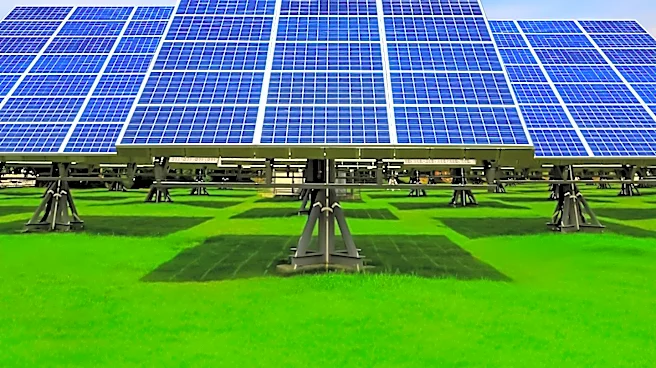
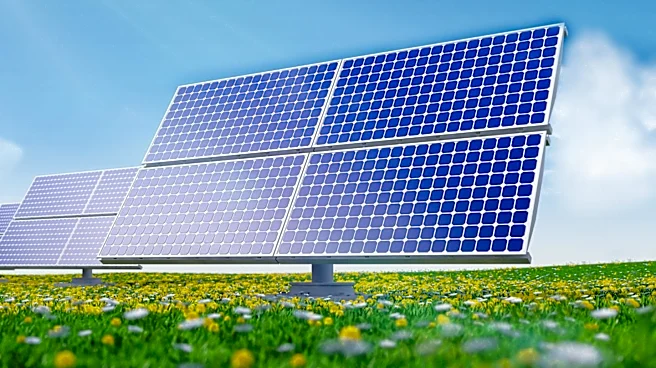
British company UKSOL is set to launch the first regulatory-compliant plug-in solar panel kits in the UK, with sales beginning this Thursday through retailers like Argos. These kits, designed for garden mounting, will allow households to generate some
of their own electricity. UKSOL's 460W single-panel system, which includes an 800W microinverter, will retail for approximately £699, while a more powerful 890W two-panel system will cost £999. The Department for Energy Security and Net Zero (DESNZ) estimates that plug-in solar users could reduce their energy bills by £70 to £110 annually, though UKSOL's chief executive, Andrew Moore, suggests savings could be higher for optimal setups. Legal changes permitting the use of compliant devices were pushed through last month, and UKSOL is the first company to have its kits listed as compliant by the Energy Networks Association (ENA).
Why It's Important?
The introduction of compliant plug-in solar panels marks a significant step towards democratizing renewable energy access for UK households. This technology offers consumers a direct way to reduce their reliance on traditional energy companies and potentially lower their electricity bills, fostering greater energy independence. The availability of these kits could stimulate a new segment of the renewable energy market, encouraging innovation and competition. For the broader energy landscape, widespread adoption of plug-in solar could contribute to decentralized power generation, reducing strain on the national grid and supporting the UK's net-zero targets. However, initial prices may be higher than anticipated, which could affect widespread adoption, particularly among lower-income households, despite hopes for future price reductions as the market matures.
What's Next?
Plug-in solar panels will be available for delivery starting this Thursday, though widespread in-store availability at major retailers like supermarkets is expected to take several weeks due to logistical challenges. Other companies are also working to get their plug-in solar devices compliant, suggesting an expansion of available products in the near future. Experts anticipate that prices for these kits may decrease over time as demand grows and supply increases, similar to trends observed in Germany and other European countries where such panels are popular. The success of this initial rollout will likely influence further government policies and incentives aimed at promoting micro-generation and household renewable energy adoption.
Beyond the Headlines
The emergence of plug-in solar technology represents a shift in consumer engagement with energy production, moving from passive consumption to active generation. This could foster greater environmental awareness and a sense of empowerment among households. Beyond immediate bill savings, the technology contributes to energy resilience by diversifying power sources and reducing vulnerability to grid outages or price fluctuations. There are also broader implications for urban planning and housing design, as balconies and gardens become potential sites for energy generation. The regulatory framework for such devices will continue to evolve, balancing safety standards with accessibility, and could serve as a model for other countries looking to decentralize their energy systems. The 'feel-good factor' of generating one's own clean power could also drive behavioral changes towards more sustainable living.