




What's Happening?
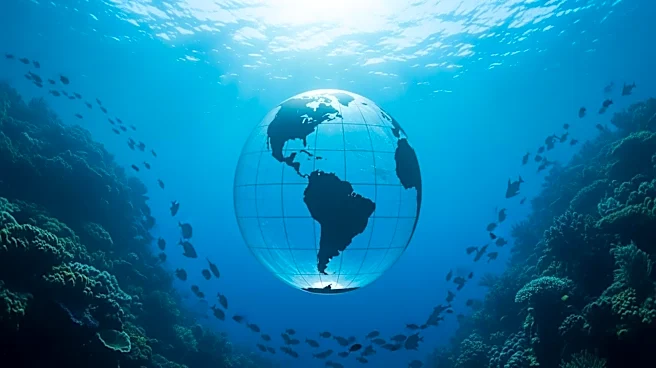
On World Ocean Day, celebrated on June 8, scientist Sylvia Earle has called for global leaders to commit to protecting 30% of the world's oceans by 2030. This initiative, known as the 30x30 goal, aims to safeguard marine biodiversity by designating marine protected
areas (MPAs). Earle emphasizes the importance of these areas in maintaining ocean health and suggests that thinking like a fish can help understand the necessity of such protections. The call to action was highlighted during the 2026 International Ocean Film Festival at the Harbor Branch of the Florida Oceanographic Institute, where various films showcased the critical role of oceans and the threats they face, such as the loss of kelp forests due to overpopulation of sea urchins and the need for more protected areas to maintain ecological balance.
Why It's Important?
The push to protect 30% of the oceans is crucial for preserving marine ecosystems that are vital for global biodiversity and climate regulation. Oceans play a significant role in carbon sequestration, with kelp forests alone absorbing 20% more carbon than rainforests. The loss of these habitats due to unchecked sea urchin populations and other threats could exacerbate climate change impacts. Protecting marine areas can help restore ecological balance, support fisheries, and sustain the livelihoods of communities dependent on marine resources. The initiative also aligns with broader environmental goals and could position participating countries as leaders in global conservation efforts.
What's Next?
The next steps involve rallying international support for the 30x30 goal, with countries like Chile already expanding their marine protected areas. This expansion includes the Juan Fernández MPA, which will increase Chile's protected marine areas to over 50%. Such commitments are expected to inspire other nations to follow suit. Additionally, ongoing research and conservation efforts, such as those studying great white sharks off the California coast, will continue to inform and drive policy decisions. The success of these initiatives will depend on global cooperation and the willingness of governments to prioritize ocean conservation in their environmental agendas.
Beyond the Headlines
The call for increased marine protection highlights the interconnectedness of human and ocean health. As awareness grows, there is potential for cultural shifts towards more sustainable practices and greater public engagement in conservation efforts. The films showcased at the festival serve as powerful tools for education and advocacy, potentially influencing public opinion and policy. Moreover, the focus on marine conservation could lead to advancements in technology and research, further enhancing our understanding of ocean ecosystems and their role in global health.