



What's Happening?
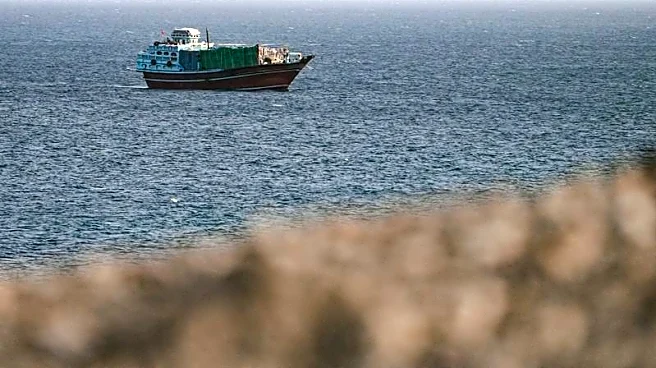
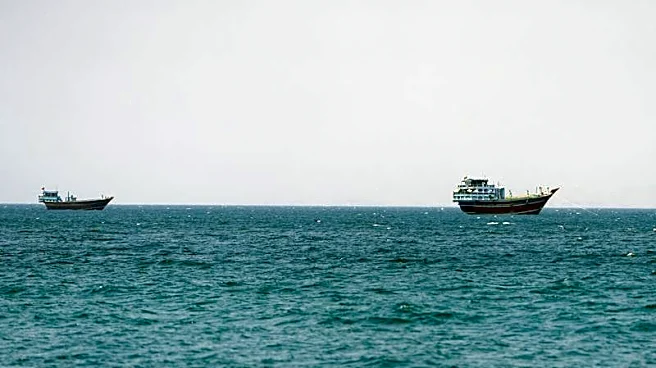
Traffic in the Strait of Hormuz has significantly decreased as tensions between the US and Iran continue to escalate. President Trump has acknowledged the challenges in reopening the waterway, which is crucial for global oil and commercial shipping. The
strait, a strategic maritime chokepoint, has seen a sharp drop in transits, with only five ships passing through on a recent day. The ongoing conflict has led to a near-closure of the waterway, affecting global shipping and oil transportation. Despite US efforts to maintain open passage, many shippers are avoiding the area due to security concerns.
Why It's Important?
The decline in traffic through the Strait of Hormuz has significant implications for global oil markets and international trade. As a major route for oil transportation, disruptions in the strait can lead to increased oil prices and economic instability. The ongoing US-Iran tensions exacerbate these challenges, impacting global supply chains and economic growth. For the US, maintaining open passage through the strait is crucial for energy security and geopolitical stability. The situation underscores the complexities of international diplomacy and the potential for regional conflicts to have far-reaching economic consequences.
What's Next?
The US is likely to continue diplomatic and military efforts to ensure the security of the Strait of Hormuz. However, the path to resolving tensions with Iran remains uncertain, with potential for further escalation. The international community may seek to mediate the conflict to prevent disruptions in global oil supply. Businesses and governments will need to monitor the situation closely, as prolonged instability could lead to strategic shifts in energy policies and trade routes.