



What's Happening?
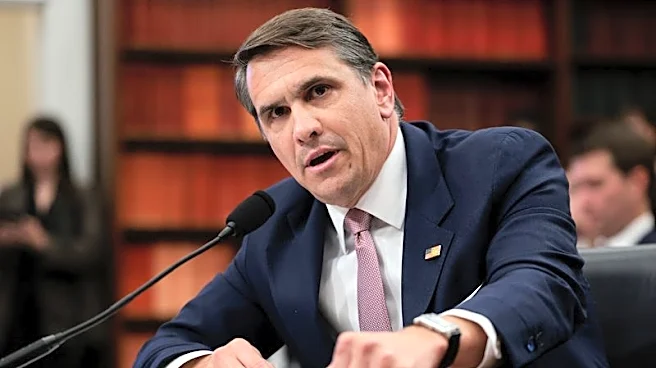
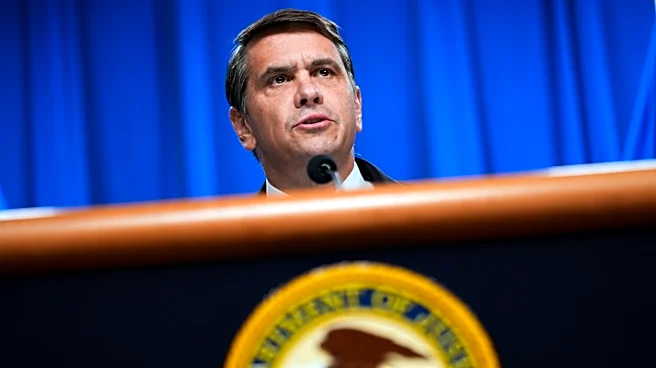
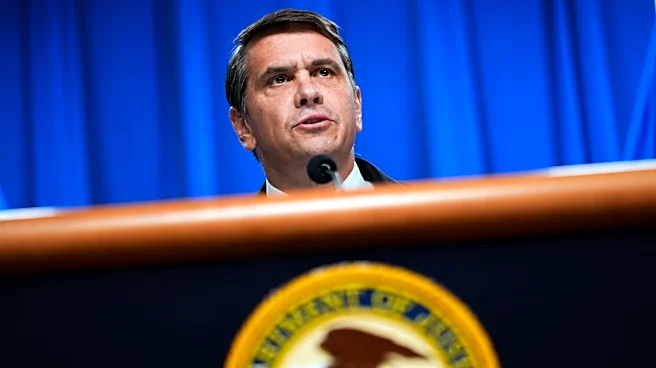
Acting Attorney General Todd Blanche announced that the Department of Justice (DOJ) will not proceed with a $1.8 billion 'anti-weaponization' fund, which has been a contentious issue in Congress. The fund was designed to provide financial compensation
to individuals claiming federal government misuse against them. Blanche confirmed this decision during a House Appropriations Committee hearing, responding to Democratic Rep. Grace Meng's inquiries. The fund faced significant opposition from Republicans, who argued it could undermine their legislative agenda. The decision follows a district judge's temporary block on the fund's establishment, and Blanche's testimony aimed to reassure GOP members. Despite this, some Republicans remain skeptical about the fund's complete abandonment, as it was part of a legal settlement involving President Trump and the IRS.
Why It's Important?
The DOJ's decision to halt the fund is significant as it reflects ongoing tensions between the executive branch and Congress, particularly concerning the balance of power and oversight. The fund's suspension may ease some Republican concerns, potentially facilitating smoother legislative processes. However, it also highlights the complexities of legal settlements involving high-profile figures like President Trump. The fund's cessation could impact individuals seeking redress for alleged government overreach, raising questions about accountability and justice. The situation underscores the challenges in navigating political and legal landscapes, especially when intertwined with partisan agendas.
What's Next?
The DOJ's decision may lead to further political maneuvering as Democrats, led by Senate Minority Leader Chuck Schumer, plan to push for votes to abolish the fund. The GOP's response will be crucial in determining the fund's future and its implications for related legislative efforts. Additionally, the legal settlement's other components, such as the IRS's agreement not to audit President Trump's past tax returns, remain in place, potentially inviting further scrutiny and debate. The outcome of these developments could influence future negotiations and the broader political climate in Washington.