


What's Happening?
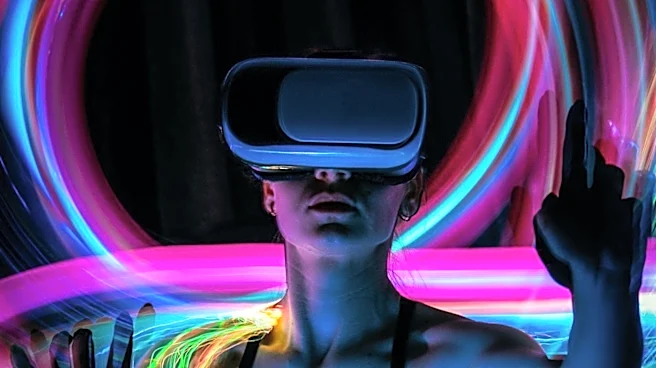
Freemasonry is actively exploring the integration of its traditions and practices with modern digital technologies, specifically the metaverse and artificial intelligence (AI). There is a growing interest in creating digital lodges and Masonic art NFT
collections. For instance, the Portuguese company Skyunicron has showcased a 'Solomon Temple' within a metaverse platform, designed as a virtual meeting place for Freemasons globally. This initiative aims to foster 'brotherly love and harmony' in a digital space. Discussions also revolve around the potential of AI to enhance the Masonic experience, with tools like the 'Digital Freemasonry Expert' AI being introduced to provide members with quick access to information, historical facts, and answers to questions. The application of AI in Masonry is seen as beneficial if used constructively by its members, suggesting a cautious yet optimistic approach to technological adoption.
Why It's Important?
The integration of Freemasonry with the metaverse and AI signifies a significant shift in how traditional organizations are adapting to the digital age. For Freemasonry, a fraternity known for its historical roots and secretive nature, embracing these technologies could broaden its reach and appeal to a new generation, potentially revitalizing membership and engagement. The creation of virtual meeting spaces like the 'Solomon Temple' in the metaverse could overcome geographical barriers, allowing members from diverse locations to connect and participate in Masonic activities. Furthermore, the use of AI tools for knowledge dissemination could standardize and enhance the understanding of Masonic heritage among its members. This trend could also serve as a model for other traditional or membership-based organizations considering how to leverage emerging technologies to maintain relevance and foster community in an increasingly digital world. However, it also raises questions about the preservation of traditional rituals and the balance between digital convenience and the sanctity of long-standing practices.
What's Next?
The future will likely see continued development and expansion of digital Masonic initiatives. More projects involving Masonic art NFT collections and virtual lodges are anticipated to emerge, potentially leading to a more formalized 'Digital Freemasonry' structure. The ongoing exploration of AI applications suggests that more sophisticated tools will be developed to assist with administrative tasks, historical research, and even personalized learning experiences for members. The success of these digital ventures will depend on their ability to maintain the core values and traditions of Freemasonry while offering engaging and accessible digital experiences. There will also be a need to address potential challenges such as digital security, the authenticity of virtual interactions, and ensuring that technology serves to enhance rather than dilute the essence of the fraternity. The broader adoption of these technologies could lead to a redefinition of what it means to be a Freemason in the 21st century.
Beyond the Headlines
The embrace of the metaverse and AI by Freemasonry touches upon deeper societal and philosophical implications. It highlights the ongoing tension between tradition and innovation, and how ancient institutions navigate the rapid pace of technological change. The concept of a 'Digital Freemasonry' raises questions about the nature of community and belonging in virtual spaces. Can the profound bonds and shared experiences traditionally fostered in physical lodges be replicated or even enhanced in a metaverse? Furthermore, the application of AI in understanding and interpreting historical and philosophical texts within Freemasonry could lead to new insights or, conversely, raise concerns about the potential for AI to influence or alter interpretations of sacred knowledge. This development underscores a broader cultural shift where digital realms are increasingly becoming extensions of our physical and social lives, prompting a re-evaluation of identity, community, and the transmission of knowledge in the digital age.