






What's Happening?
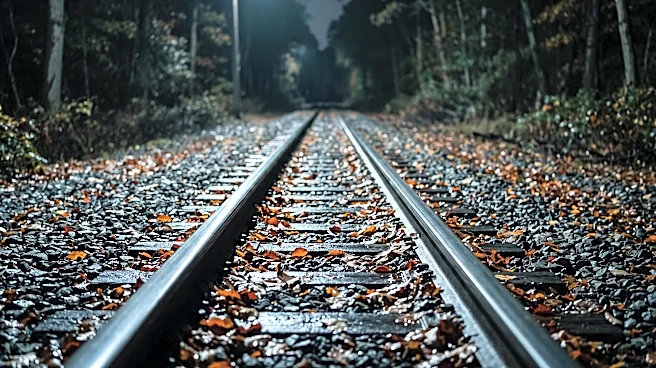
The Southeastern Pennsylvania Transportation Authority (SEPTA) is implementing an aggressive maintenance program to combat 'Slippery Rail Season,' a condition caused by crushed falling leaves depositing a residue on tracks. This residue reduces friction
for train wheels, leading to reduced travel speeds to maintain safe operations, particularly on inclines, declines, and near station platforms. SEPTA's maintenance strategy involves running three wash trains nightly to pressure wash the rails, blasting away leaves and leaf residue, and applying a traction adhesion gel. This program, which typically runs from late October through mid-December, aims to mitigate service delays. Despite these efforts, riders may still experience intermittent delays. SEPTA advises passengers to allow extra travel time, stay alert for potential sliding past stations, and check septa.org/alerts or the SEPTA app for real-time service updates and platform announcements.
Why It's Important?
The 'Slippery Rail Season' poses significant operational challenges for public transportation systems like SEPTA, directly impacting the reliability and efficiency of commuter services. The reduced friction on tracks necessitates slower train speeds, leading to delays that can disrupt daily commutes for thousands of passengers in the Philadelphia metropolitan area. This issue highlights the vulnerability of rail infrastructure to environmental factors and the continuous need for proactive maintenance. For businesses, these delays can affect employee punctuality and supply chain logistics, while for individuals, they can cause missed appointments and increased stress. SEPTA's comprehensive maintenance program, involving specialized wash trains and adhesion gels, demonstrates a commitment to rider safety and service continuity, which is crucial for maintaining public trust and encouraging the use of public transit as a viable transportation option. The communication of rider safety tips and service alerts is vital for managing passenger expectations and ensuring a smoother travel experience during this period.
What's Next?
SEPTA will continue its aggressive maintenance program throughout the 'Slippery Rail Season,' which typically lasts until mid-December, or until colder weather and complete leaf fall eliminate the condition. The agency will likely monitor the effectiveness of its wash trains and adhesion gel applications, adjusting strategies as needed based on weather conditions and operational feedback. Passengers should anticipate ongoing advisories to check for service alerts and allow for additional travel time. SEPTA's focus will remain on ensuring rider safety and minimizing delays, while also communicating transparently about any service disruptions. The long-term implications may include exploring new technologies or methods to further mitigate the impact of environmental factors on rail operations, potentially leading to more resilient and all-weather-capable transit systems in the future.
Beyond the Headlines
The 'Slippery Rail Season' phenomenon underscores the intricate relationship between urban infrastructure and natural environmental cycles. While seemingly a minor issue, the accumulation of leaf residue on tracks reveals a broader challenge faced by transportation networks in adapting to and mitigating the effects of natural processes. This situation highlights the continuous investment required in maintenance and technological solutions to ensure the smooth functioning of essential public services. Beyond the immediate operational concerns, it also touches upon the importance of urban forestry management, as the presence of trees, while beneficial for air quality and aesthetics, can also create specific challenges for infrastructure. The proactive measures taken by SEPTA reflect a commitment to public safety and service reliability, which are foundational to the social contract between transit authorities and their communities, emphasizing that even seemingly small environmental factors can have significant logistical and economic ramifications.