




What's Happening?
The U.S. Space Force has launched a $1.7 billion competition for commercial companies to modernize its global satellite command infrastructure, following the cancellation of a previous bespoke antenna program. This new initiative, part of the restructured
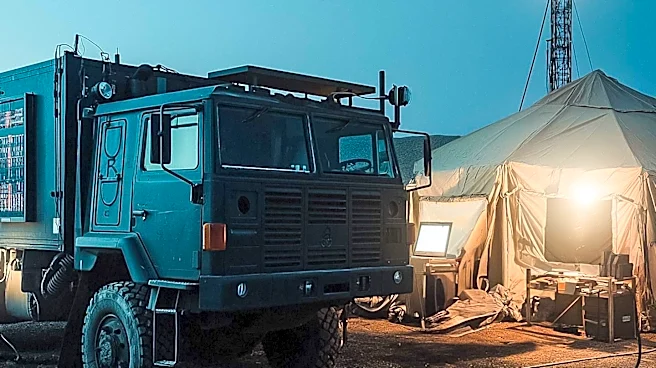
Satellite Communications Augmentation Resource (SCAR) program, aims to upgrade the Satellite Control Network (SCN), which consists of 19 ground antennas responsible for tracking, commanding, and monitoring U.S. military and intelligence satellites. The SCN is currently operating above its recommended capacity, as highlighted in a 2023 Government Accountability Office (GAO) report, and is struggling to manage the increasing number of government satellites. The Space Force is now exploring three business models for commercial engagement: Government-Owned, Contractor-Operated (GOCO), Exclusive-Use Leases, and Antenna-as-a-Service (AaaS). This shift represents a move away from a single-vendor development approach towards a multi-vendor commercial model, seeking commercially derived ground stations instead of custom-built solutions. Initial white papers from interested commercial firms are due by October 15, with prototype installation awards anticipated in early 2027.
Why It's Important?
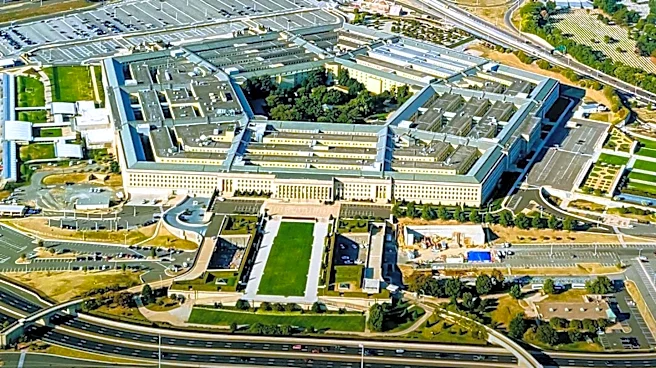
This strategic shift by the Space Force is critical for maintaining the operational effectiveness of U.S. military and intelligence satellites, which are vital for national security. The existing Satellite Control Network, described as the second-oldest active weapons system in the Pentagon, is outdated and cannot meet the demands of a rapidly expanding satellite fleet. The failure of the previous $1.7 billion bespoke antenna program, which led to significant financial losses for its primary contractor and multiple securities class-action lawsuits, underscores the challenges of traditional defense procurement methods. By embracing a commercial-first model, the Space Force aims to leverage advancements in commercial satellite technology, such as phased-array antennas, which have become more cost-effective due to mass production for consumer applications like Starlink and 5G. This approach could lead to more efficient and scalable solutions, ensuring the U.S. military's space assets remain functional during both peacetime and conflict, and potentially reducing overall costs by utilizing existing commercial infrastructure.
What's Next?
Commercial companies are expected to submit their initial white papers by October 15, outlining their proposals for modernizing the Satellite Control Network under the SCAR program. Prototype installation awards are projected for early 2027. The Space Force will evaluate the proposed business models—Government-Owned, Contractor-Operated (GOCO), Exclusive-Use Leases, and Antenna-as-a-Service (AaaS)—to determine the most effective and secure contractual relationships for its sensitive missions. This competition is likely to attract both traditional defense contractors and innovative commercial space infrastructure startups. The outcome will dictate who builds and operates the ground infrastructure essential for the U.S. military's space operations. Additionally, the Space Force will need to address potential cybersecurity risks associated with sharing ground infrastructure with commercial operators, particularly in the Antenna-as-a-Service model, which involves military satellite commands and telemetry traveling through shared software and networking infrastructure.
Beyond the Headlines
The Space Force's pivot to a commercial-first model for its satellite ground infrastructure signifies a broader trend within the Pentagon to leverage existing commercial technologies rather than commissioning custom-built solutions. This shift has profound implications for the defense industry, potentially opening doors for non-traditional players and fostering greater innovation. It also highlights the increasing convergence of commercial and military space capabilities. However, this approach introduces complex challenges, particularly regarding cybersecurity and data integrity when military operations rely on shared commercial networks. The Space Force's explicit acknowledgment of risks like 'multi-tenant data leakage, scheduling conflicts, and software interoperability bottlenecks' in its solicitation language indicates a recognition of these issues. The success of this initiative will depend on the Space Force's ability to effectively mitigate these risks while harnessing the cost efficiencies and technological advancements offered by the commercial sector, potentially setting a precedent for future defense procurements.