


What's Happening?
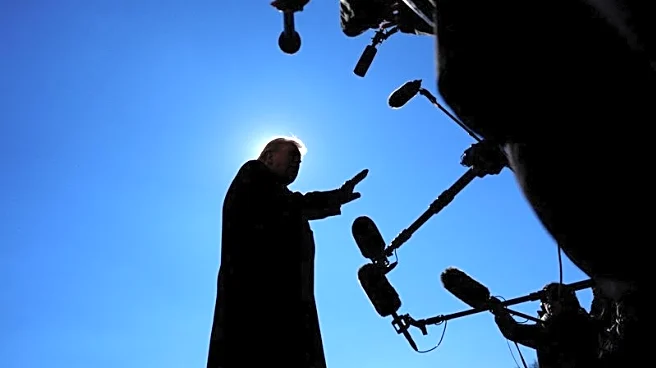
The White House has announced that President Trump's visit to Beijing for a summit with Chinese President Xi Jinping has been postponed due to the ongoing conflict in the Middle East. Originally scheduled for late March, the meeting is now expected to occur
in May. The delay highlights the geopolitical impact of the war with Iran, which is influencing U.S.-China relations and the upcoming U.S. midterm elections. The summit was anticipated to address the next phase of the U.S.-China trade war, which has been on hold since October. China is closely monitoring the situation, as it may affect its leverage in trade negotiations with the U.S., especially given President Trump's electoral concerns.
Why It's Important?
The postponement of the summit underscores the complex interplay between international conflicts and domestic politics. For the U.S., the delay could impact trade negotiations with China, as both countries have a vested interest in preventing further escalation of the trade war. The conflict in the Middle East, particularly with Iran, adds another layer of complexity, potentially affecting global oil prices and economic stability. For China, the situation presents both challenges and opportunities in leveraging trade talks, as President Trump's unpredictability and strategic priorities could influence the outcomes. The delay also has implications for the U.S. midterm elections, as economic factors like inflation and trade agreements could sway voter sentiment.
What's Next?
The rescheduled summit in May will likely focus on the U.S.-China trade war and the broader geopolitical implications of the Middle East conflict. Both nations will need to navigate these issues carefully to avoid further economic disruptions. The U.S. midterm elections in November add urgency to the situation, as President Trump may seek to secure favorable trade deals to bolster his domestic standing. China's strategy will involve balancing its economic interests with the need to maintain stable relations with the U.S. The outcome of the summit could have significant repercussions for global trade and economic policies.