





What's Happening?
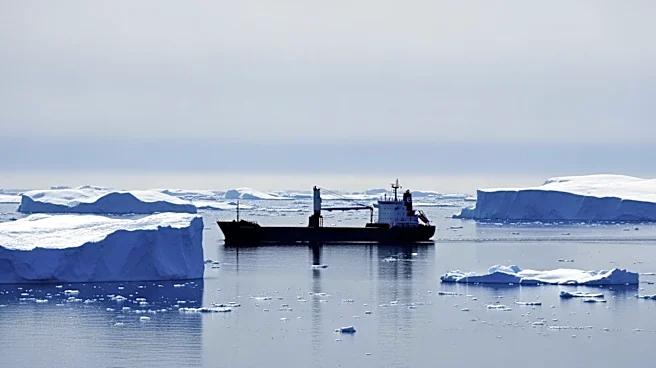
Recent analysis by credit insurance firm Coface indicates that while Arctic shipping routes are becoming more navigable due to climate change, their commercial impact remains limited. The report highlights that these routes primarily benefit the transport
of raw materials such as crude oil, diesel, and LNG, offering significant cost savings for liquid bulk shipping. However, container shipping remains uncompetitive in the Arctic due to operational constraints and specific costs associated with Arctic navigation. Despite the shorter distances, the economies of scale of traditional routes still prevail. The report suggests that only about 3.5 percent of trade between East Asia, Northern Europe, and North America is likely to use Arctic routes in the short term.
Why It's Important?
The development of Arctic shipping routes has significant implications for global trade, particularly for industries linked to energy, metals, and timber. While the routes offer potential cost savings for certain commodities, the overall impact on global trade is expected to be minimal in the short term. The geopolitical significance of these routes is more pronounced, as they provide alternative pathways amidst disruptions at critical chokepoints. The findings suggest that until container transport becomes economically viable on a large scale, Arctic routes will not significantly alter global trade dynamics. This highlights the need for continued investment in infrastructure and technology to fully realize the potential of Arctic shipping.
What's Next?
In the near future, the focus will likely remain on enhancing the viability of Arctic routes for specific commodities. The ongoing development of projects like the Yamal Peninsula LNG project will continue to drive traffic in the region. However, significant advancements in technology and infrastructure are required to make container shipping competitive in the Arctic. Stakeholders in the shipping industry may explore partnerships and investments to address these challenges. Additionally, geopolitical developments and climate change will continue to influence the strategic importance of Arctic routes.
Beyond the Headlines
The expansion of Arctic shipping routes raises important environmental and regulatory considerations. The increased traffic in these ecologically sensitive areas necessitates stringent environmental protections to mitigate potential impacts. Furthermore, the geopolitical implications of Arctic navigation could lead to shifts in international alliances and trade policies. As countries vie for influence over these routes, the Arctic may become a focal point for diplomatic and economic negotiations.