








What's Happening?
The United States and Mexico have commenced a third round of bilateral discussions to revise the United States-Mexico-Canada Agreement (USMCA). These talks, which exclude Canada, are the first formal negotiations since the Trump administration decided
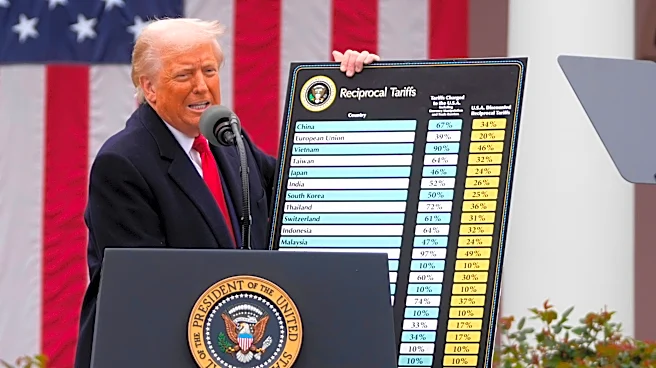
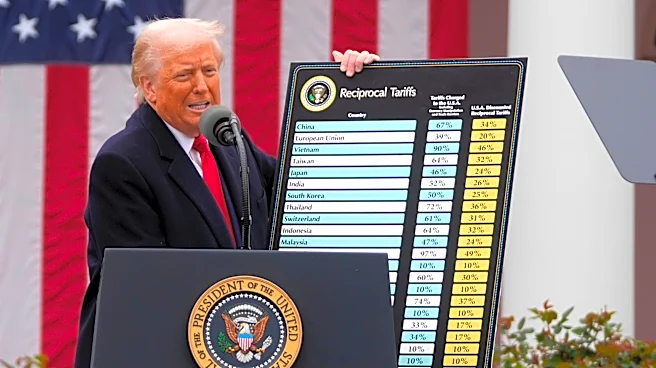
not to extend the six-year-old trade pact on July 1. The discussions aim to address various trade issues, including economic security and regional trade protections, to prevent countries like China from accessing the U.S. market through Mexico and Canada. Concurrently, President Trump has imposed new tariffs on nearly $20 billion worth of Canadian goods in response to Canada's retaliatory tariffs on U.S. products. This move has further strained relations with Canada, which has been largely sidelined in the ongoing USMCA negotiations.
Why It's Important?
The resumption of USMCA talks between the U.S. and Mexico is crucial for maintaining and potentially enhancing the trade framework that supports nearly $1.6 trillion in annual trade among the three countries. The exclusion of Canada from these talks and the imposition of new tariffs could disrupt the trilateral trade dynamics and impact industries reliant on tariff-free access. The U.S. aims to strengthen regional trade protections, which could affect supply chains and market access for non-regional goods. The outcome of these negotiations could significantly influence North American trade policies, affecting sectors such as automotive, steel, and agriculture, and potentially altering the competitive landscape for businesses operating within these regions.
What's Next?
The ongoing negotiations are expected to delve into technical details concerning trade in autos, steel, aluminum, agriculture, and labor. Mexico's new ambassador to the U.S., Roberto Lazzeri, has expressed optimism about reaching a new deal by the end of the year. The U.S. is pushing for its North American partners to adopt similar trade barriers to those imposed on non-regional goods. The talks will also address the growing trade deficit with Mexico, which has been a concern for the Trump administration. The resolution of these issues will be pivotal in determining the future structure and terms of the USMCA, with potential implications for regional economic integration and trade policies.