






What's Happening?
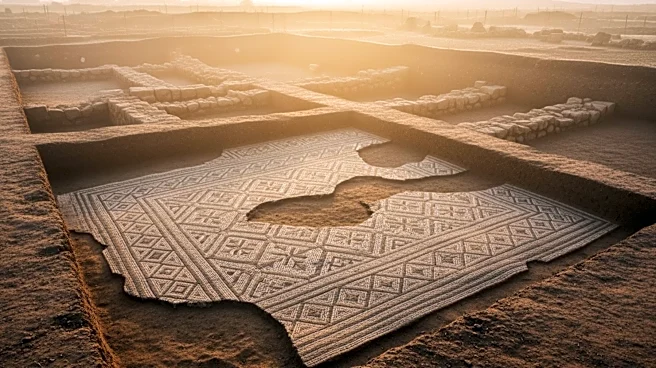
Archaeologists in the United Kingdom have uncovered the remains of a Roman villa in Norfolk, England, during a survey conducted for offshore wind farm cable-laying. The villa, dating back nearly 2,000 years, was found to be over 100 feet long and included
features such as a covered porch and a bathhouse, indicating the affluence of its past occupants. Initial surveys using magnetometers suggested the presence of modern rubble, but further investigation revealed the villa's structure. The site also included ancillary buildings and evidence of agricultural activities, such as crop processing. Artifacts like a brooch, copper hair pins, and an inscribed silver ring were discovered, along with two notable bronze objects. The survey covered over 1,850 acres and also revealed a Neolithic pit and two lost medieval villages.
Why It's Important?
The discovery of the Roman villa provides valuable insights into rural life in Roman Britain, highlighting the architectural and cultural influences of the Roman Empire in the region. This archaeological find not only enriches historical understanding but also underscores the importance of integrating heritage preservation with modern infrastructure projects. The collaboration between archaeologists and the energy sector exemplifies how responsible development can coexist with the protection of historical sites. The findings contribute to the broader narrative of Britain's historical landscape, offering a glimpse into the past that can inform future cultural and educational initiatives.
What's Next?
The ongoing analysis of the excavation data, including GPS mapping and 3D photogrammetry, will continue to shed light on the villa's historical context and significance. The site has been preserved in situ, allowing for future research and potential public engagement opportunities. The findings may lead to further archaeological investigations in the area, potentially uncovering more about the region's Roman and pre-Roman history. Additionally, the project serves as a model for balancing heritage conservation with renewable energy development, potentially influencing future infrastructure projects.
Beyond the Headlines
The discovery highlights the ethical considerations of archaeological preservation in the face of modern development. It raises questions about how societies value and integrate historical knowledge into contemporary planning. The project demonstrates the potential for archaeological findings to enhance cultural identity and community engagement, fostering a deeper appreciation for historical heritage. As renewable energy projects expand, similar discoveries may prompt discussions on the prioritization of cultural heritage in development agendas.