



What's Happening?
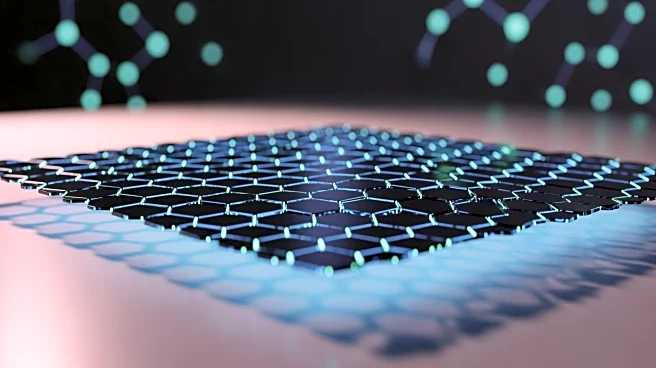
Researchers in Switzerland have developed a groundbreaking graphene-based coating capable of neutralizing hospital superbugs using infrared light. This innovative material, created by the Nanomaterials in Health Lab at Empa, a Swiss materials science
institute, has shown remarkable efficacy in early tests, eliminating nearly all traces of one drug-resistant bacterial strain and over 90% of another. The coating, which is invisible to the naked eye, can be applied to medical equipment without altering its appearance. The technology works by using infrared light to heat the coating, triggering a chemical reaction that generates oxygen radicals, which attack and damage bacterial surfaces. This development could significantly impact the fight against antibiotic-resistant pathogens, offering a new tool for hospitals to combat infections.
Why It's Important?
The emergence of drug-resistant bacteria poses a significant threat to global health, as conventional antibiotics become less effective. The development of graphene-based coatings offers a promising solution to this challenge, providing a new method to combat superbugs without relying on traditional antibiotics. This technology could revolutionize infection control in healthcare settings, reducing the incidence of hospital-acquired infections and improving patient outcomes. Additionally, the ability to activate the antimicrobial properties of the coating with light allows for precise control, minimizing potential side effects and enhancing safety. The success of this research could pave the way for broader applications, including in dental implants and other medical devices.
What's Next?
The research team plans to engage with private sector partners to begin clinical trials within the next few years. However, widespread patient access to this technology may still be a decade away. In the meantime, the team is exploring additional applications for the graphene-based coatings, such as in nanomaterial-based sensors and cancer therapies. The continued development and eventual commercialization of this technology could have far-reaching implications for healthcare, offering new strategies to combat antibiotic resistance and improve patient care.