

What's Happening?
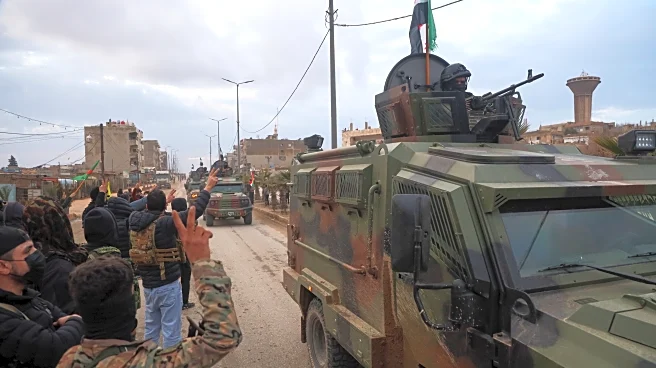
Clashes have erupted between the Syrian army and the Kurdish-led Syrian Democratic Forces (SDF) in Aleppo, resulting in at least three deaths and 31 injuries. This violence occurs as high-level talks are ongoing regarding the integration of the SDF into
Syria's state institutions, a process outlined in a March 10 agreement. The agreement aims for a nationwide ceasefire and the integration of civil and military institutions in northeastern Syria. Both the SDF and the Syrian Defense Ministry have accused each other of initiating the conflict. The SDF claims that mortar and heavy-weapon attacks by factions affiliated with the Damascus government targeted SDF-held neighborhoods, while the Syrian Defense Ministry states its forces are responding to SDF fire positions targeting residents' homes and army deployment points.
Why It's Important?
The clashes highlight the fragile nature of the peace process in Syria and the complexities involved in integrating the SDF, a powerful non-governmental force backed by the U.S., into the Syrian state framework. The SDF holds strategic territories in the northeast, and its integration is crucial for Syria's stability. The violence underscores the challenges of reconciling different factions within Syria, which could impact regional security and the broader geopolitical landscape. The involvement of Turkey, which opposes the SDF due to its links to the Kurdistan Workers' Party, adds another layer of complexity to the situation.
What's Next?
The immediate cessation of hostilities between the Syrian army and the SDF suggests a temporary de-escalation, but the underlying tensions remain unresolved. The success of the integration talks is critical, and further diplomatic efforts are needed to ensure lasting peace. The international community, particularly the U.S. and Turkey, will likely continue to play significant roles in influencing the outcome of these negotiations. The potential for renewed violence remains if the integration process fails to progress.