


What's Happening?
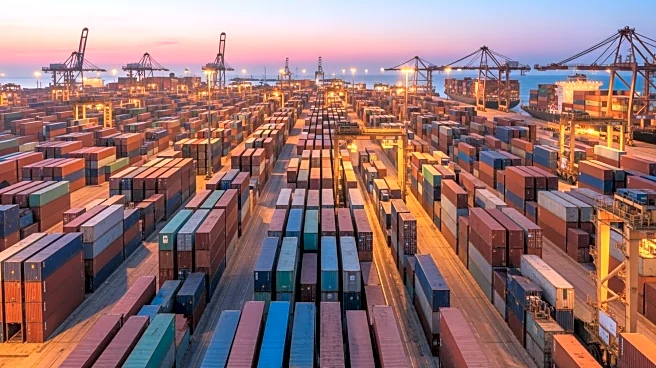
In 2025, China's trade surplus reached a record high of $1.2 trillion, despite ongoing trade tensions with the United States. The U.S. tariffs, initially intended to reduce reliance on Chinese manufacturing, have led to a significant decrease in direct
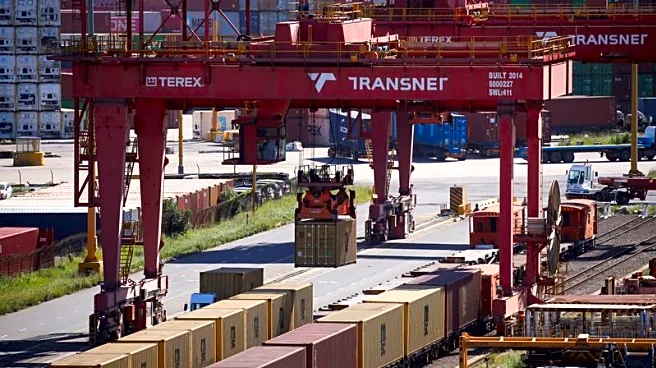
U.S.-China trade. However, China has adapted by increasing exports to other regions, such as Africa, ASEAN countries, and Latin America. This shift has been facilitated by a 'great reallocation' in global supply chains, where countries like Vietnam and Mexico import Chinese parts and export finished goods to the U.S., effectively bypassing tariffs.
Why It's Important?
The U.S. tariffs have not curtailed China's export growth as intended, highlighting the resilience and adaptability of China's economy. This development underscores the complexity of global trade dynamics and the challenges of using tariffs as a tool for economic policy. The shift in trade routes suggests that while the U.S. aims to decouple from China, the interconnected nature of global supply chains makes this difficult. The situation also raises questions about the effectiveness of protectionist measures and their long-term impact on U.S. industries and consumers.
What's Next?
As China continues to diversify its trade partnerships, the U.S. may need to reassess its trade strategy. The ongoing trade tensions could lead to further shifts in global supply chains, with potential implications for U.S. businesses and consumers. Policymakers may need to consider alternative approaches to address trade imbalances and support domestic industries. Additionally, the growing trade surplus could prompt other countries to adopt similar protectionist measures, potentially leading to increased global trade tensions.
Beyond the Headlines
The trade surplus highlights China's transition from a manufacturing hub to a high-tech supplier, competing with advanced economies. This shift poses challenges for countries reliant on traditional manufacturing and underscores the need for innovation and adaptation in the face of changing global trade dynamics. The situation also reflects broader geopolitical tensions, as countries navigate the complexities of economic interdependence and strategic competition.