




What's Happening?
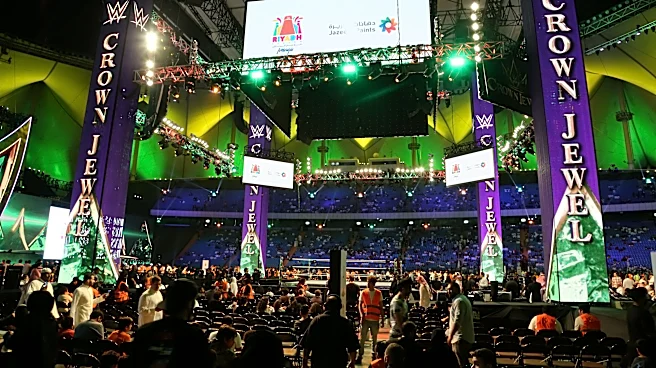
Several WWE crew members have reportedly rejected an offer of $3,000 in additional hazard pay to travel to Riyadh, Saudi Arabia, for the Crown Jewel Premium Live Event. This decision comes amidst escalating tensions and reports of attacks in the region,
raising significant security concerns among staff. According to 'WrestleVotes Radio' on 'Fightful Select,' two WWE employees confirmed the company's offer of extra compensation for the trip. Despite the financial incentive, a number of workers have chosen not to travel, prioritizing their safety over the additional pay. TKO, the parent company of WWE, is continuing with preparations for the November 7 event, even as the security situation in the region remains a point of concern for its personnel. The rejection highlights a growing apprehension among staff regarding international travel to areas deemed high-risk.
Why It's Important?
This development is significant as it underscores the growing concerns over employee safety within major entertainment organizations operating in volatile international regions. The refusal of hazard pay by WWE staff indicates a strong prioritization of personal security over financial incentives, which could set a precedent for how companies manage international events in high-risk zones. For TKO and WWE, this situation could lead to logistical challenges in staffing the Crown Jewel event, potentially impacting production quality or requiring last-minute adjustments. Furthermore, it could influence future decisions regarding event locations and the level of compensation deemed necessary to mitigate perceived risks. The incident also brings to light the ethical considerations companies face when asking employees to work in potentially dangerous environments, and the balance between business operations and staff well-being.
What's Next?
In the immediate future, TKO will likely need to address the staffing shortages for the Crown Jewel event, potentially by reassigning roles, hiring temporary staff, or making further concessions to encourage travel. The company may also face increased scrutiny from employees and unions regarding safety protocols for international events. Looking ahead, this situation could prompt a re-evaluation of WWE's strategy for hosting events in regions with geopolitical instability. It might lead to more robust risk assessments, enhanced security measures, or even a shift in event locations to safer territories. The incident could also influence negotiations for future international events, with staff potentially demanding higher hazard pay or more stringent safety guarantees. Stakeholders, including investors and fans, will be watching to see how TKO manages these challenges and ensures the safety of its personnel while maintaining its global event schedule.
Beyond the Headlines
Beyond the immediate logistical and financial implications, this situation touches upon broader themes of corporate responsibility and employee rights in a globalized entertainment industry. The staff's rejection of hazard pay signals a potential shift in the power dynamic between employees and corporations, where personal safety is increasingly non-negotiable. This could lead to a re-evaluation of industry standards for international travel and risk management, particularly for companies that frequently operate in diverse and sometimes unstable geopolitical landscapes. The incident also highlights the complex interplay between business interests, geopolitical realities, and the well-being of the workforce. It may encourage other organizations to review their own policies regarding employee safety in high-risk areas, potentially leading to industry-wide changes in how such situations are handled and how employees are compensated and protected.