






What's Happening?
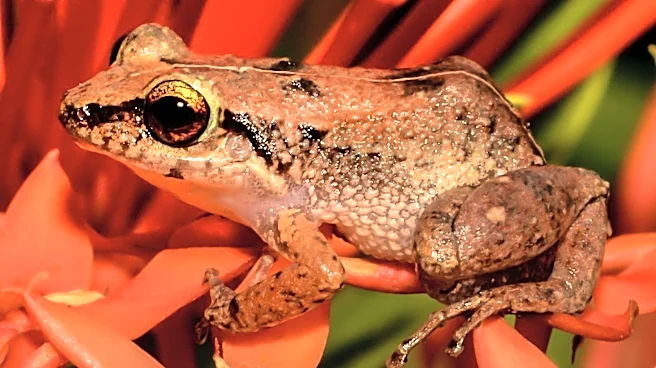
Scientists at the Japan Advanced Institute of Science and Technology have discovered a bacterium from the intestines of Japanese tree frogs that can eliminate cancer tumors in mice with a single dose. The bacterium, Ewingella americana, was found to thrive
in the low-oxygen environments of tumors, directly attacking cancer cells and stimulating the immune system. In a study, a single intravenous dose of the bacterium resulted in a 100% complete response rate in a mouse model of colorectal cancer, outperforming standard therapies.
Why It's Important?
This discovery represents a novel approach to cancer treatment, utilizing living bacteria to target tumors directly. The ability of E. americana to selectively accumulate in tumors and avoid healthy tissues suggests a potential for high efficacy with minimal side effects. If applicable to humans, this method could revolutionize cancer therapy, offering a new avenue for treating solid tumors that are resistant to conventional treatments. The study also underscores the potential of exploring biodiversity for medical breakthroughs.
What's Next?
Future research will focus on testing the bacterium's efficacy in other types of cancer, such as breast and pancreatic cancer. Researchers plan to optimize treatment methods, including dose fractionation and direct tumor injection, and explore combinations with existing therapies. Clinical trials may be initiated to assess safety and effectiveness in humans. The findings encourage further exploration of naturally occurring bacteria as a source of innovative cancer treatments, potentially leading to new therapeutic options for difficult-to-treat cancers.