







What's Happening?
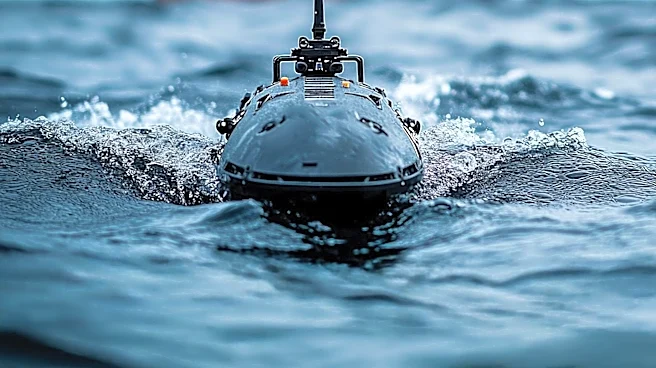
Singapore-based BeeX has demonstrated its ALPHA underwater drone's mine-killing capabilities in the United Kingdom, following its selection as a winner in the U.S. Navy's Mine Countermeasure Modernization Prize Challenge. During a September 17 demonstration
in the UK, the ALPHA drone successfully placed and detonated explosive charges on both a moored sea mine and a moving steel plate. The event, hosted by British defense consultancy Copper Turtle, involved collaboration with other firms providing charges, acoustic firing systems, and electric sensors for mine detection. The ALPHA is a hovering autonomous underwater vehicle, allowing it to maintain position for precise target inspection and charge placement. The U.S. Navy and the Defense Innovation Unit named BeeX as one of three winners in their challenge on October 1, with plans to integrate the winning systems into the fleet's autonomous mine countermeasure kits. This development highlights a growing focus on uncrewed systems for mine clearance by navies globally.
Why It's Important?
The U.S. Navy's adoption of BeeX's ALPHA drone signifies a significant advancement in naval mine countermeasures, potentially enhancing the safety and efficiency of mine clearance operations. By integrating autonomous underwater vehicles (AUVs) like ALPHA, the Navy can reduce the direct risk to personnel who traditionally conduct these dangerous tasks. This move aligns with broader defense strategies to leverage advanced robotics and AI in military applications, improving operational capabilities in contested maritime environments. The ability of ALPHA to precisely neutralize mines, even moving targets, offers a critical advantage in maintaining sea lanes and protecting naval assets. For the U.S. defense industry, this also signals a continued interest in innovative solutions from international partners, fostering competition and technological exchange that can drive further advancements in naval defense systems. The success of such technologies can influence future procurement strategies and defense spending priorities.
What's Next?
Following its win in the U.S. Navy's Mine Countermeasure Modernization Prize Challenge, BeeX's ALPHA system is slated for integration into the fleet's autonomous mine countermeasure kits. This integration process will likely involve further testing, refinement, and training for naval personnel to effectively deploy and operate the new technology. The U.S. Navy will work with BeeX to ensure seamless incorporation into existing naval operations and infrastructure. This could also lead to additional contracts for BeeX as the Navy expands its autonomous mine countermeasure capabilities. Furthermore, the successful demonstration and U.S. Navy endorsement may attract interest from other allied navies looking to modernize their mine warfare capabilities, potentially opening new international markets for BeeX. The ongoing development of such autonomous systems suggests a future where mine clearance is increasingly automated and less reliant on human intervention in hazardous zones.
Beyond the Headlines
The integration of advanced autonomous underwater vehicles like BeeX's ALPHA into naval fleets represents a broader shift in military doctrine towards unmanned systems and remote operations. This trend raises important ethical and strategic considerations regarding the role of AI in warfare, particularly in tasks that involve the use of explosives. While enhancing safety for human personnel, it also necessitates robust protocols for command, control, and accountability of autonomous systems. The ability to remotely reprogram and control drones via satellite links, as demonstrated by BeeX engineers accessing ALPHA over Starlink, highlights the increasing connectivity of battlefield assets and the potential vulnerabilities associated with such reliance on communication networks. This technological evolution could redefine naval power projection, emphasizing technological superiority and precision over traditional manpower-intensive approaches, thereby influencing geopolitical dynamics and naval arms races in the long term.