







What's Happening?
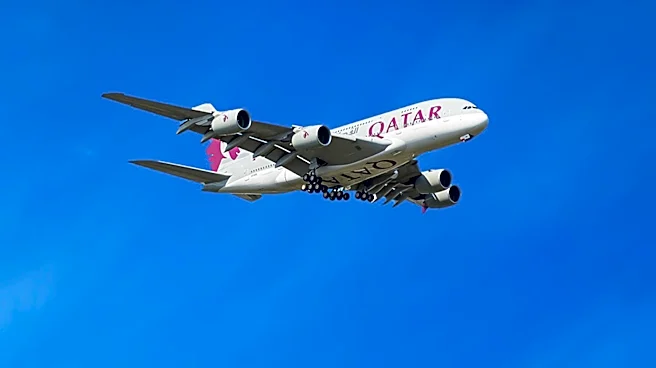
Two male passengers were reportedly handcuffed to their seats on Qatar Airways flight VA7 from Melbourne to Doha after allegedly making violent threats, including claiming they had a gun. The incident, which occurred on Friday, involved the men becoming
agitated shortly after boarding, moving frequently through the cabin, and rummaging through their luggage. Approximately six hours before landing, the situation escalated as the men allegedly began fighting and threatening other passengers and crew members. Witnesses described a terrifying ordeal, with one passenger claiming the men were spitting on and headbutting flight attendants, requiring at least six people to restrain each man. Qatar Airways confirmed the physical altercation and stated that both men were restrained and subsequently arrested upon the plane's arrival in Doha.
Why It's Important?
This incident highlights the critical importance of passenger and crew safety on commercial flights, a paramount concern for the aviation industry globally. The alleged threats, particularly the claim of possessing a gun, underscore the severe security risks that airlines and authorities must continuously mitigate. Such events can cause significant distress to passengers and crew, potentially leading to long-term psychological impacts. For airlines like Qatar Airways, these incidents can damage their reputation and lead to increased scrutiny of their in-flight security protocols and crew training for handling disruptive passengers. The involvement of fellow passengers in restraining the individuals also points to the collective responsibility and potential dangers faced by everyone on board when such situations arise. The swift arrest upon arrival demonstrates the commitment of authorities to address and prosecute individuals who jeopardize flight safety.
What's Next?
Following their arrest in Doha, the two men will likely face legal proceedings under Qatari law, which could include charges related to endangering flight safety, assault, and making threats. Qatar Airways will likely conduct an internal investigation into the incident to review its procedures for managing disruptive passengers and to assess the effectiveness of its crew's response. This may lead to potential enhancements in training protocols for flight attendants on de-escalation techniques and physical restraint. The incident could also prompt a review of pre-boarding security measures, particularly for long-haul international flights, to identify and prevent potentially disruptive individuals from boarding. Other airlines may also take note of this event and re-evaluate their own security and passenger management policies to prevent similar occurrences.
Beyond the Headlines
The incident on Qatar Airways flight VA7 extends beyond a simple security breach, touching upon the broader psychological impact of air travel and the increasing challenges faced by airline staff. The alleged acts of spitting and headbutting crew members highlight a disturbing trend of aggression towards frontline service workers, raising questions about passenger behavior and the need for greater public awareness regarding appropriate conduct during flights. The involvement of multiple passengers in restraining the individuals also brings to light the 'good Samaritan' aspect, where ordinary citizens are compelled to act in extraordinary circumstances, potentially putting themselves at risk. This event could also spark discussions about the legal frameworks surrounding in-flight disturbances and the consistency of penalties across different jurisdictions, especially for international flights. The long-term implications for the individuals involved, both the perpetrators and those who were threatened or assisted in their restraint, could be significant, ranging from legal consequences to psychological trauma.




