






What's Happening?
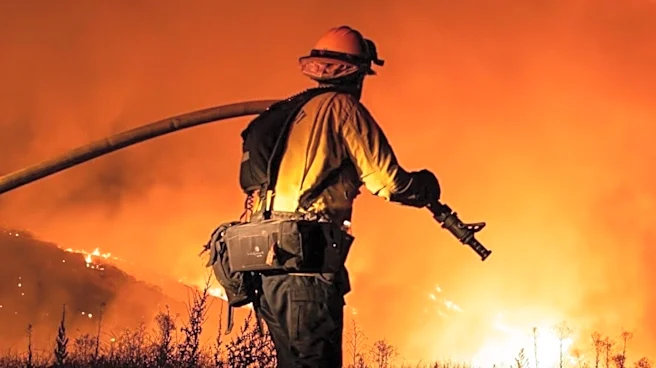
U.S. Representative Andrea Salinas (OR-06) has voiced significant concerns regarding the Trump administration's reorganization of the Forest Service, particularly its potential impact on wildfire management. During a House Agriculture Committee hearing
in July, Salinas highlighted that removing fire personnel from the four Interior agencies and consolidating them into a new U.S. Wildland Fire Service could fracture the critical communications link between land management and fire management. She noted that the Forest Service has lost 16% of its workforce since 2024 and that its headquarters are moving from Washington, D.C., to Salt Lake City, with regional centers closing and research consolidating in Fort Collins, Colorado. Salinas stated that this sweeping reorganization creates more questions than answers and is alarming given its implementation during wildfire season, threatening the Forest Service's overall effectiveness and the loss of valuable institutional knowledge.
Why It's Important?
The reorganization of federal wildfire management agencies, as criticized by Representative Salinas, carries significant implications for public safety and environmental protection across the U.S., especially in Western states prone to wildfires. A fractured communication link between land and fire management could lead to less efficient and coordinated responses to wildfires, potentially increasing their destructive impact on communities and ecosystems. The loss of experienced staff and institutional knowledge within the Forest Service further exacerbates these concerns, as effective wildfire suppression and prevention rely heavily on expertise and continuity. This situation could strain resources, endanger firefighters, and result in greater economic losses from property damage and ecological devastation, affecting industries such as timber, tourism, and agriculture.
What's Next?
The concerns raised by Representative Salinas suggest that the effectiveness of the new U.S. Wildland Fire Service and the reorganized Forest Service will be under close scrutiny, particularly as the wildfire season progresses. There may be continued calls for congressional oversight and potential legislative action to address perceived shortcomings in the new structure. Stakeholders, including state and local fire agencies, environmental groups, and affected communities, will likely monitor the situation closely and advocate for improvements in federal wildfire management strategies. The ongoing study by the Department of Agriculture on consolidating all federal wildland fire operations, due by February 15, 2027, will also be a critical factor in future policy decisions, though its results will not be available for the fiscal 2027 budgeting cycle.
Beyond the Headlines
The debate over the Forest Service reorganization highlights a deeper tension between administrative efficiency and operational effectiveness in critical public services. The move to consolidate and centralize operations, while potentially aimed at reducing redundancy, risks disrupting established communication channels and local expertise that are vital for nuanced environmental management. This situation also underscores the broader challenge of managing natural resources in the face of climate change, where wildfires are becoming more frequent and intense. The loss of institutional knowledge and experienced personnel could have long-term consequences for forest health, biodiversity, and the resilience of communities in fire-prone regions, potentially shifting the burden of wildfire response more heavily onto state and local entities.