







What's Happening?
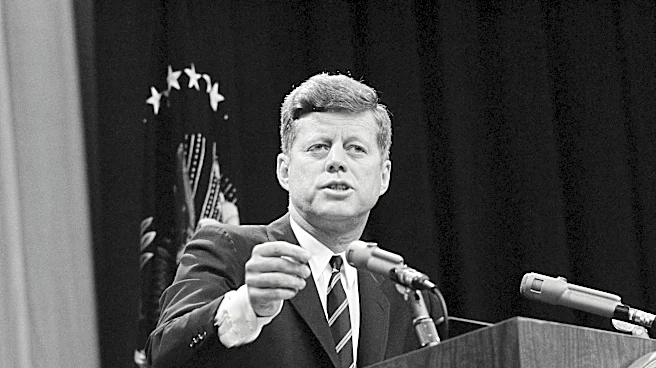
John F. Kennedy, the 35th President of the United States, served from January 1961 until his assassination on November 22, 1963, in Dallas, Texas. He was elected in 1960, defeating Richard Nixon in a close contest, and became one of the youngest presidents
in American history at 43 years old. Before his presidency, Kennedy served in the U.S. Navy during World War II and later entered politics, building a national following through his intelligence and communication skills. His administration confronted significant historical challenges, including the Cuban Missile Crisis, the Cold War, and the civil rights movement. Kennedy also initiated the ambitious goal of sending an American to the Moon before the end of the 1960s. His inaugural address famously encouraged Americans to consider their contributions to the nation. His wife, Jacqueline Kennedy, as First Lady, was recognized for her elegance, cultural interests, and efforts to preserve the history of the White House, including a televised tour in 1962.
Why It's Important?
John F. Kennedy's presidency, though brief, had a profound and lasting impact on American society and politics. His call to public service and his administration's focus on ambitious national goals, such as the space race, inspired a generation and reshaped national priorities. His handling of the Cuban Missile Crisis is often cited as a pivotal moment in Cold War diplomacy, demonstrating the high stakes of international relations during that era. The civil rights movement gained significant momentum during his term, laying groundwork for future legislative changes. His assassination deeply shocked the nation and the world, marking a tragic turning point in American history and leaving a legacy of both promise and unfulfilled potential. The public's enduring fascination with the Kennedy family reflects their unique blend of political ambition, public service, glamour, and tragedy, which continues to resonate in American cultural memory.
What's Next?
While John F. Kennedy's presidency concluded with his assassination, his legacy continues to influence American political discourse and public service. Future generations of leaders and citizens often draw upon his calls for national unity and civic engagement. The historical challenges his administration faced, such as Cold War tensions and civil rights struggles, remain relevant in contemporary discussions about foreign policy and social justice. The ambitious goals set during his presidency, particularly in space exploration, laid the foundation for future scientific and technological advancements. The ongoing study and interpretation of his policies and leadership continue to shape academic understanding of 20th-century American history and presidential leadership. The Kennedy family's continued presence in public life also ensures that discussions about their historical impact persist.
Beyond the Headlines
The Kennedy family's story extends beyond John F. Kennedy's presidency, encompassing a broader narrative of ambition, public service, and profound tragedy that has become deeply woven into the fabric of American national memory. The assassinations of both John and Robert Kennedy, along with other family misfortunes, led to the popular, though culturally descriptive, phrase 'Kennedy curse.' This narrative highlights the intense scrutiny and personal pressures that accompany political power and public life. The family's enduring appeal stems from the contrast between their immense influence and wealth and the personal heartbreaks they endured, making them a symbol of both aspiration and vulnerability. Their story reflects significant periods in American history, including the Cold War and the civil rights movement, and continues to provoke discussions about the nature of political dynasties and the intersection of private lives with public expectations.