







What's Happening?
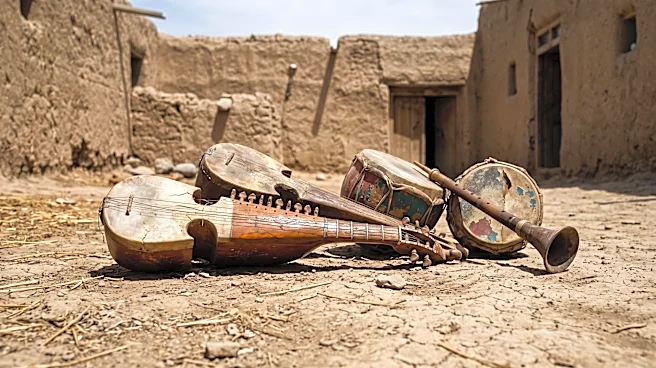
The Taliban in Afghanistan's eastern Khost province have destroyed 650 musical instruments and related items. This action is part of a months-long crackdown enforcing the group's nationwide ban on music. Mustaghfir Gurbaz, a Taliban spokesperson in Khost,
stated on X that officials from the Department for the Promotion of Virtue and Prevention of Vice burned the confiscated items. Since regaining power in August 2021, the Taliban have prohibited most forms of music, permitting only specific types of religious vocal chanting. Ministry spokesman Saif ul Islam Khyber asserts that music is forbidden in Islam, promoting immoral behavior and distracting from religious obligations, a view disputed by many Islamic scholars. This enforcement has significantly altered Afghanistan's cultural landscape, with music shops in areas like Kabul's Kucha-e-Kharabat neighborhood being replaced by other businesses. Many musicians have either fled Afghanistan or are practicing their craft in secret.
Why It's Important?
This ongoing destruction of musical instruments by the Taliban represents a significant blow to Afghanistan's cultural identity and artistic heritage. The ban not only silences musicians but also threatens the transmission of centuries-old musical traditions to younger generations. For many Afghan musicians, music is a family tradition and an essential part of their cultural fabric. The enforcement of this ban has forced many to abandon their profession, seek refuge abroad, or risk severe punishment by continuing to play in secret. This situation highlights the severe tension between the Taliban's strict religious policies and the efforts of many Afghans to preserve their country's rich artistic and cultural legacy. The international community, including cultural organizations, has widely condemned these actions as an assault on freedom and creativity.
What's Next?
The Taliban is expected to continue enforcing its music ban across Afghanistan, leading to further confiscations and destruction of musical instruments. This will likely result in more musicians either going underground or seeking to leave the country to preserve their art and livelihoods. The Afghanistan National Institute of Music (ANIM), which relocated to Lisbon, will likely continue its efforts to support displaced Afghan musicians and safeguard the country's musical traditions from abroad. The ongoing crackdown will likely deepen the cultural divide within Afghanistan, as the Taliban's policies clash with the desires of many citizens to maintain their cultural expressions. The international community will likely continue to condemn these actions, though direct intervention to reverse the ban remains unlikely.
Beyond the Headlines
The Taliban's music ban extends beyond mere prohibition; it represents a systematic attempt to reshape Afghan society and culture according to a rigid interpretation of religious law. This policy has profound ethical and cultural implications, as it suppresses artistic expression and erases a vital part of national heritage. The destruction of instruments symbolizes a broader effort to control public life and individual freedoms. The resilience of musicians who continue to play in secret, despite the risks, underscores the deep human need for artistic expression and cultural continuity. This situation also raises questions about the role of cultural institutions in exile and their capacity to preserve and promote a nation's heritage when it is under attack within its own borders. The long-term impact could be a significant loss of unique Afghan musical forms and traditions.