
What's Happening?
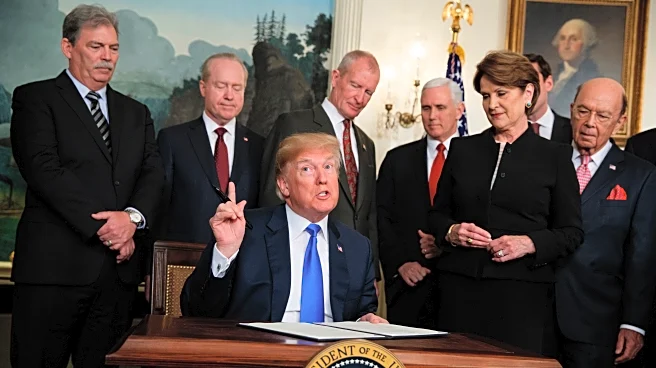
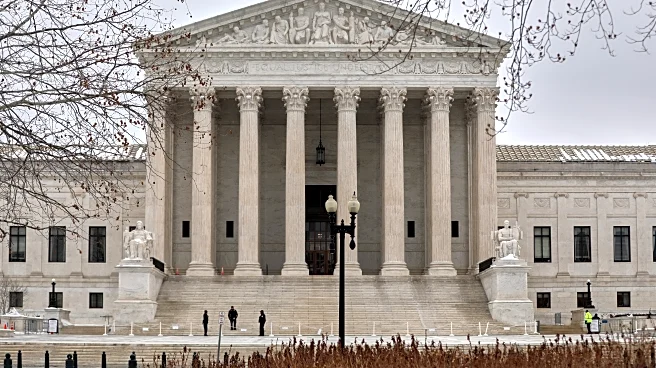
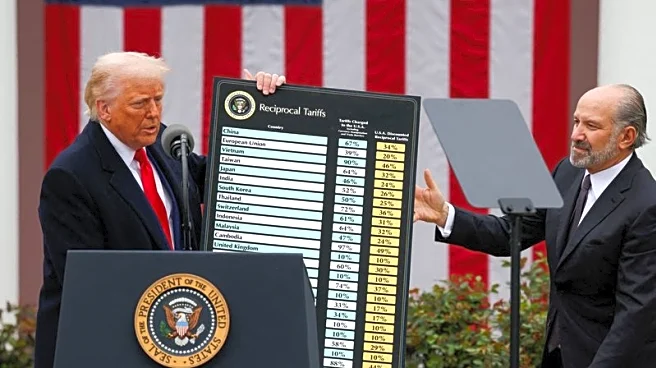
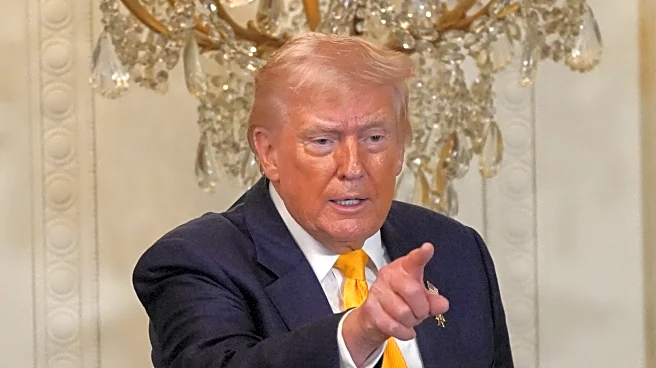
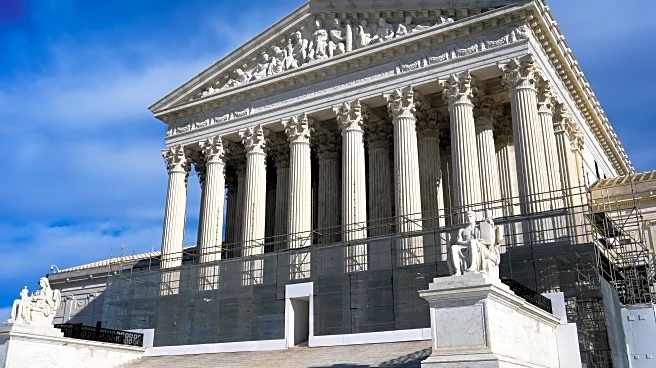
The Supreme Court has ruled that President Trump does not have the authority to impose sweeping tariffs on nearly every country under a federal emergency powers law. This decision comes as a significant check on the executive branch's power to unilaterally
implement trade measures without congressional approval. The ruling addresses the scope of presidential powers under the International Emergency Economic Powers Act (IEEPA), which President Trump had invoked to justify the tariffs. The court's decision underscores the necessity for a more balanced approach involving both the executive and legislative branches in trade policy decisions.
Why It's Important?
This ruling is pivotal as it reaffirms the constitutional balance of power between the executive and legislative branches, particularly in matters of trade policy. By limiting the president's ability to unilaterally impose tariffs, the decision could have significant implications for U.S. trade relations and economic policy. It may lead to more collaborative efforts between Congress and the president in crafting trade agreements and tariffs, potentially affecting industries reliant on international trade. The ruling also sets a precedent that could influence future administrations' use of emergency powers in economic matters.
What's Next?
Following the Supreme Court's decision, there may be increased legislative activity as Congress seeks to assert its role in trade policy. Lawmakers could propose new legislation to clarify the limits of presidential authority under the IEEPA. Additionally, industries affected by the tariffs may lobby for changes or reversals of existing trade measures. The ruling could also prompt a reevaluation of other executive actions taken under emergency powers, leading to potential legal challenges and policy shifts.