







What's Happening?
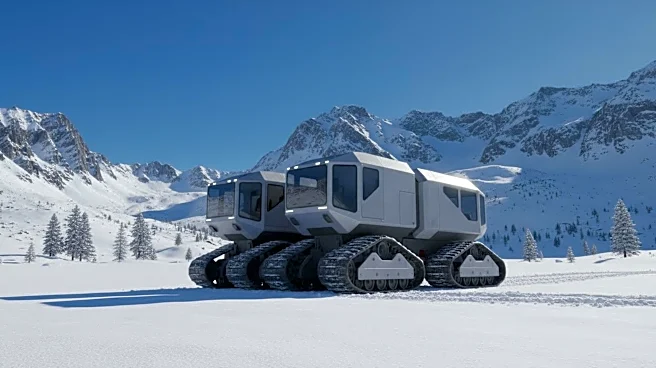
BAE Systems has delivered 19 Cold Weather All-Terrain Vehicles (CATV) to the US Army, as part of an ongoing effort to enhance the military's operational capabilities in cold environments. This delivery brings the total number of CATVs received by the Army to 58.
Some of these vehicles have been allocated to the Vermont National Guard Army Mountain Warfare School, marking the first instance of the Army National Guard receiving such equipment. The CATV is designed to replace the older Small Unit Support Vehicles (SUSV) and is available in two variants: a general-purpose model and a cargo variant. The general-purpose CATV can transport up to nine soldiers and a driver, and can be reconfigured for casualty evacuation. Additionally, the CATV is capable of amphibious operations, which is particularly beneficial for training in the Alaskan environment.
Why It's Important?
The acquisition of these vehicles is significant for the US Army as it enhances their ability to conduct operations in extreme cold weather conditions, which are prevalent in regions like Alaska. The CATVs provide improved mobility and versatility compared to the older SUSVs, allowing for better logistical support and troop movement in challenging terrains. This capability is crucial for maintaining readiness and operational effectiveness in diverse environments. The delivery also reflects the Army's commitment to modernizing its equipment to meet current and future operational demands. The involvement of the Army National Guard in receiving these vehicles underscores the importance of equipping all branches of the military with advanced technology to ensure comprehensive national defense capabilities.
What's Next?
The US Army plans to continue its acquisition of CATVs, with a total program objective of 487 units. BAE Systems has already received orders for 93 CATVs, indicating ongoing production and delivery efforts. As more vehicles are integrated into the Army's fleet, further training and operational deployment in cold weather environments are expected. This will likely involve additional exercises and maneuvers to fully utilize the CATVs' capabilities, particularly in amphibious operations. The continued rollout of these vehicles will enhance the Army's strategic flexibility and readiness in cold regions, potentially influencing future procurement and deployment strategies.