






What's Happening?
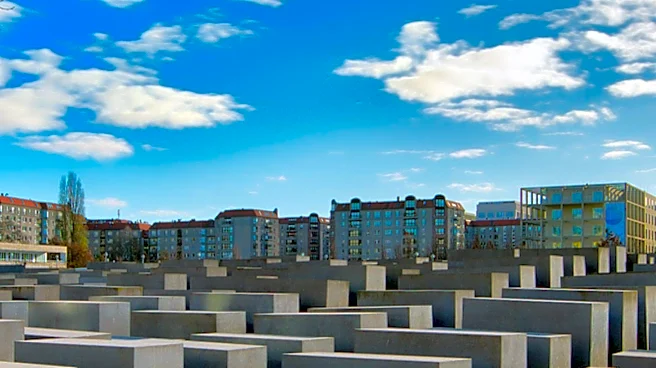
A call has been made for Jewish philanthropic organizations and institutions to adopt a 'Living Memory Standard' for Holocaust remembrance budgets. This standard advocates for every major Holocaust remembrance initiative to include a concrete commitment
to helping living survivors. The proposal emphasizes that while museums, exhibitions, and archives are crucial for preserving memory, the immediate needs of the approximately 31,000 Jewish Holocaust survivors remaining in America, and the global survivor population with a median age of 87, must also be addressed. Many survivors face challenges affording basic necessities like groceries, rent, utilities, medical expenses, and require assistance navigating complex systems for benefits and care. The Claims Conference reports that 71% of survivors worldwide received social welfare services in the past year, and 66,700 needed food-security assistance.
Why It's Important?
This initiative is critically important because it shifts the focus of Holocaust remembrance from solely historical preservation to active support for those who directly experienced its horrors. As the survivor population rapidly declines, with an estimated 70% expected to be gone within a decade, ensuring their dignity and well-being in their final years becomes an urgent moral imperative. By integrating direct aid into remembrance budgets, the Jewish community can demonstrate a tangible commitment to the individuals whose stories form the foundation of these educational and commemorative efforts. This approach addresses the practical needs of an aging and vulnerable population, preventing crises that can arise from uncovered medical expenses or housing instability, and ensures that remembrance is not just about the past but also about the present welfare of its living witnesses.
What's Next?
The proposal suggests that Jewish funders and institutions should integrate the 'Living Memory Standard' into their planning for new campaigns. This could involve new exhibitions including matching campaigns for survivor assistance, federations partnering with direct-care organizations for educational initiatives, or digital testimony projects offering donors the option to support both historical preservation and immediate survivor needs. Boards and funders would consider how applicants plan to connect major remembrance projects to living survivors during the approval process. This would create accountability and ensure that resources are allocated to both memory and direct support. The goal is to ensure that survivors are better off because of remembrance efforts, rather than just having their stories preserved.
Beyond the Headlines
The 'Living Memory Standard' highlights a deeper ethical consideration: the responsibility of society to care for those who have endured unimaginable trauma, especially as they age. It underscores that true remembrance extends beyond historical documentation to encompass the ongoing human needs of survivors. The call for trauma-informed care and assistance in navigating complex systems acknowledges the unique psychological and practical challenges faced by Holocaust survivors, whose past experiences can be re-triggered by unfamiliar environments or bureaucratic hurdles. This initiative could serve as a model for other communities dealing with the legacies of mass atrocities, emphasizing that honoring the past must include supporting the present lives of its victims. It challenges the notion that remembrance is solely an intellectual or commemorative exercise, asserting it as a living, compassionate commitment to justice and human dignity.