






What's Happening?
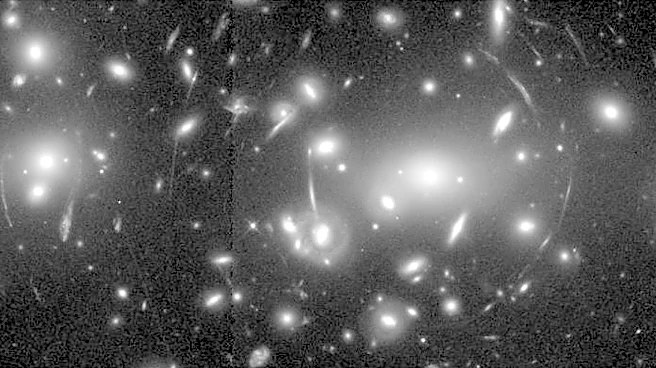
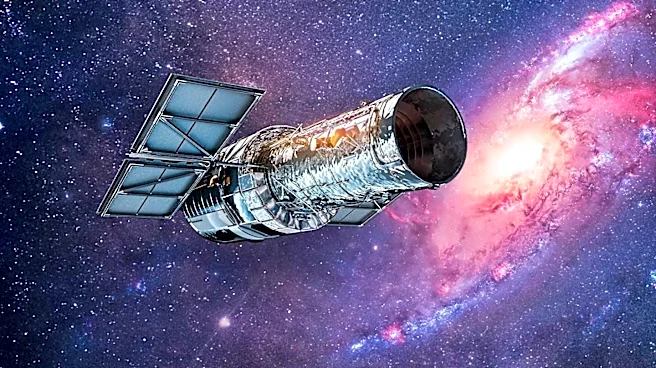
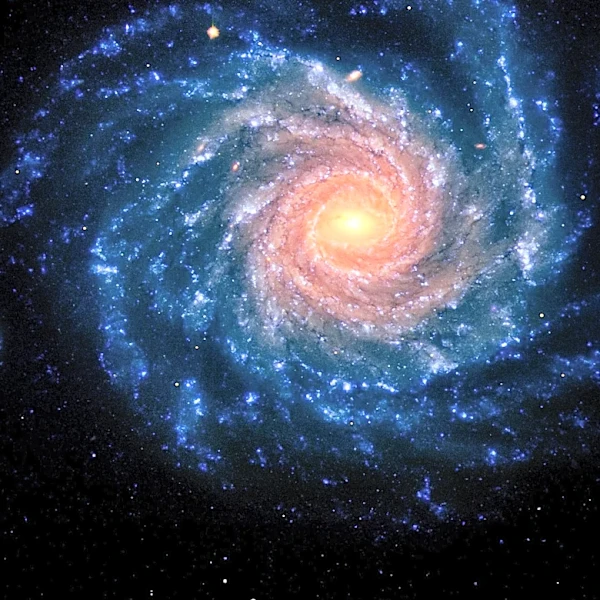
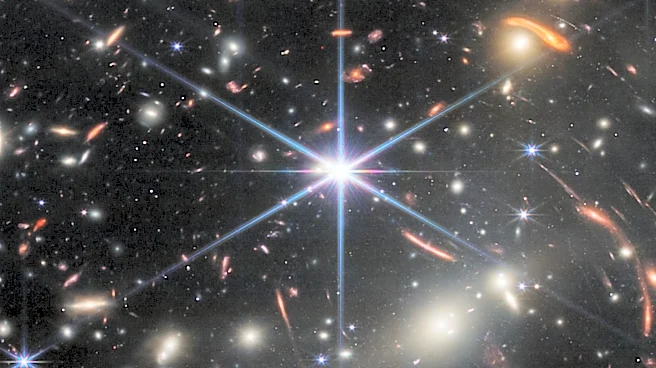
The Hubble Space Telescope has detected light from a galaxy that, under normal circumstances, should not be visible. This discovery is part of a broader set of observations that include the detection of a mysterious, unknown molecule in the atmospheres
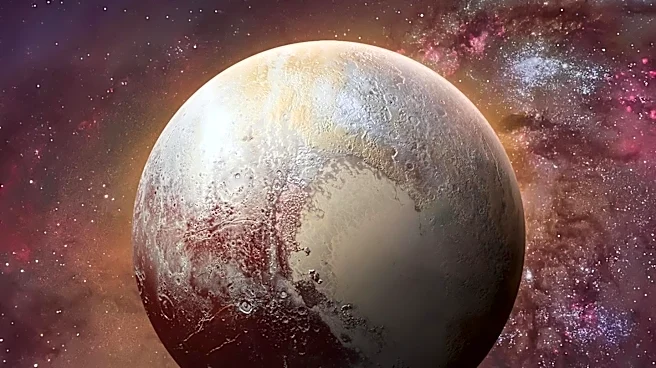
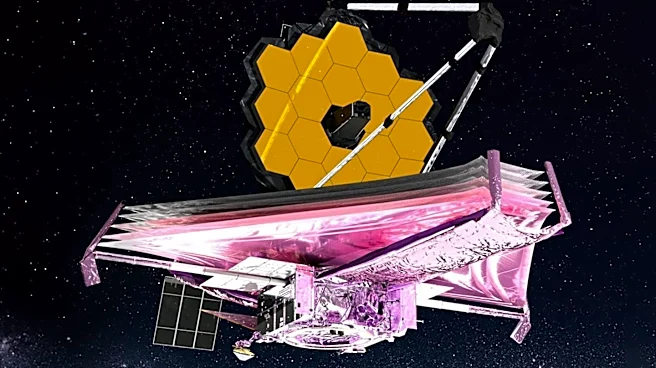
of Pluto and Titan by the James Webb Space Telescope. The 'impossible' light observed by Hubble is significant because it challenges current understanding of the universe's early stages, particularly during the Epoch of Reionization. This period is crucial for understanding how the first galaxies formed and evolved. The detection of this light suggests that there may be more to learn about the universe's history and the processes that govern galaxy formation.
Why It's Important?
The discovery of 'impossible' light from a distant galaxy by the Hubble Space Telescope has significant implications for astronomy and our understanding of the universe. It challenges existing theories about the visibility of galaxies from the early universe and suggests that there may be unknown factors at play in the formation and evolution of galaxies. This could lead to new theories and models that better explain the universe's history. For the scientific community, this discovery opens up new avenues for research and exploration, potentially leading to breakthroughs in understanding the fundamental processes of the cosmos. It also underscores the importance of space telescopes like Hubble and James Webb in expanding our knowledge of the universe.
What's Next?
Following this discovery, astronomers and researchers are likely to conduct further observations and studies to understand the nature of the 'impossible' light detected by Hubble. This may involve using other telescopes and instruments to gather more data and verify the findings. Additionally, the scientific community may develop new models or revise existing ones to account for this unexpected observation. The findings could also prompt discussions and collaborations among international space agencies and research institutions to explore the implications of this discovery further. As more data becomes available, it could lead to a deeper understanding of the universe's early stages and the processes that govern galaxy formation.