







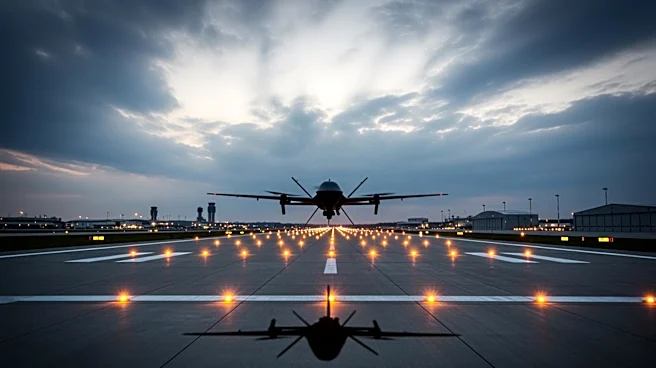
What's Happening?
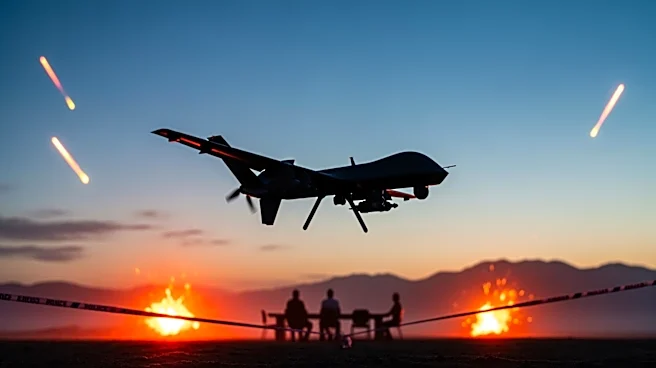
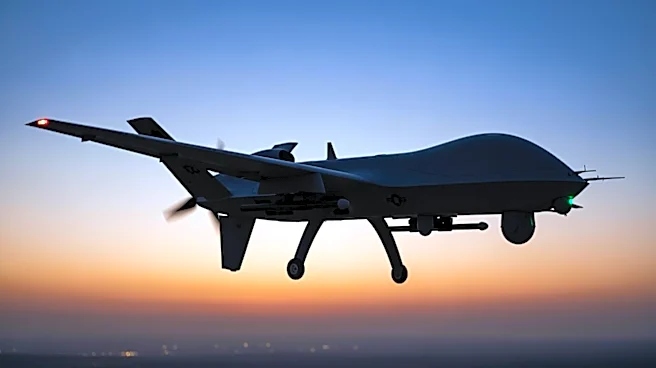
The U.S. Air Force is currently facing a significant shortage of MQ-9 Reaper drones following substantial losses during operations in the Middle East, particularly against Iran. The fleet has decreased from 231 to 135 aircraft over the past year. In response,
the Air Force is attempting to purchase additional drones from General Atomics, the manufacturer, which has fewer than 10 available. The shortage is exacerbated by the fact that the MQ-9A is out of production, with General Atomics having moved on to the MQ-9B model. The Air Force's efforts to replace the lost drones underscore the critical role these aircraft play in intelligence gathering and munitions deployment.
Why It's Important?
The depletion of the MQ-9 Reaper fleet poses a challenge to U.S. military operations, particularly in the Middle East, where these drones have been instrumental in intelligence and combat missions. The shortage could impact the Air Force's operational capabilities and strategic effectiveness in the region. The situation highlights the need for a sustainable supply of advanced military technology and the potential vulnerabilities in relying on a single type of aircraft. The Air Force's scramble to acquire more drones also reflects broader concerns about maintaining military readiness and technological superiority.
What's Next?
The Air Force is exploring options to acquire more MQ-9 Reapers, including purchasing unused drones from General Atomics and potentially repurposing parts from retired MQ-1 Predator drones. Additionally, the Air Force is in the early stages of developing a successor to the MQ-9, known as the 'MQ-9 Next,' although this new model is not expected to be operational for several years. The ongoing search for replacements and the development of new technology will be crucial in addressing the current shortfall and ensuring future operational capabilities.