





What's Happening?
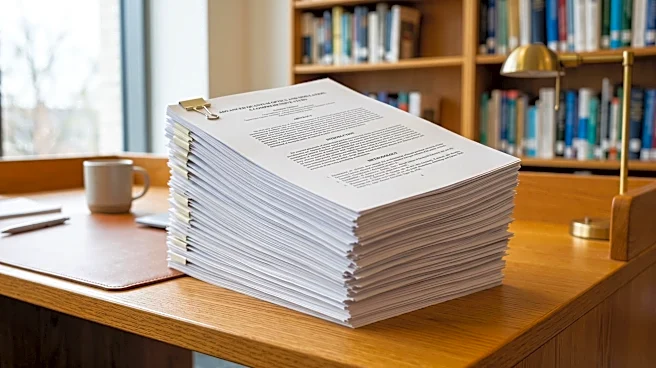
The scientific community is implementing new guidelines requiring authors to declare the use of generative AI and AI-assisted technologies in scientific writing upon submission of papers. This mandatory disclosure aims to ensure transparency regarding
the role of AI tools, such as ChatGPT, GPT-4, and Grammarly, in the research and writing process. Authors must specify the name(s) of the AI tool(s) used, the purpose(s) for their application (e.g., language refinement, grammar checks, data analysis, image generation), and the extent of AI involvement in the manuscript. This declaration should be placed in a new section before the references list, or in the acknowledgements or methods section, depending on the AI's specific use. For instance, if AI was used for data analysis, it should be noted in the methods section. This initiative reflects a growing recognition of AI's capabilities in academic work and the need for clear ethical standards.
Why It's Important?
This new mandate is crucial for maintaining the integrity and credibility of scientific research in the U.S. and globally. As AI tools become more sophisticated and widely adopted, their potential to influence research outcomes, language, and data presentation increases. Requiring disclosure ensures that readers, peer reviewers, and editors are aware of AI's contribution, allowing for a more informed evaluation of the research. It also promotes accountability among authors, who remain fully responsible for the content and accuracy of their published work, even when AI assistance is utilized. This policy helps to prevent potential issues such as AI-generated 'hallucinations' or unverified claims from entering the scientific record, thereby safeguarding the reliability of scientific literature and public trust in research findings.
What's Next?
The implementation of these disclosure requirements will likely lead to a standardization of how AI assistance is acknowledged in academic publications. Research institutions and journals will need to develop clear guidelines and examples for authors to follow, ensuring consistent and comprehensive reporting. There may also be an increased focus on developing tools and methods for verifying the originality and accuracy of AI-assisted content. Furthermore, this trend could spur discussions within the scientific community about the appropriate boundaries for AI involvement in research, potentially leading to further ethical frameworks and best practices for responsible AI use in academia. Authors will need to adapt their submission processes to include these declarations, and peer reviewers may begin to scrutinize AI disclosures as part of their evaluation.
Beyond the Headlines
Beyond the immediate impact on publication practices, this development highlights a broader shift in the landscape of academic research, where human-AI collaboration is becoming increasingly common. It raises fundamental questions about authorship, intellectual property, and the definition of human contribution in an era of advanced AI. The emphasis on human oversight and validation of AI-generated content underscores the irreplaceable role of human critical thinking and expertise in scientific inquiry. This policy could also influence the development of future AI tools, encouraging creators to build in features that facilitate transparency and accountability for their use in research. Ultimately, it represents a proactive step by the scientific community to navigate the ethical complexities introduced by AI, ensuring that technological advancements serve to enhance, rather than compromise, the pursuit of knowledge.