


What's Happening?
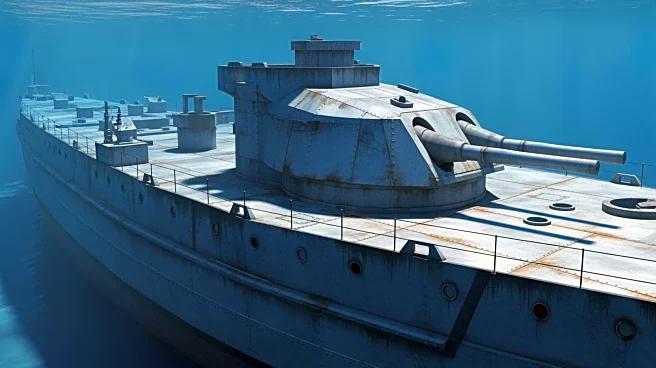
The National Oceanic and Atmospheric Administration (NOAA) has released new 3D images of the USS Monitor, a significant Civil War ironclad warship that sank off the coast of North Carolina in 1862. These images, developed in collaboration with Northrop
Grumman, provide a detailed view of the shipwreck, which lies 240 feet beneath the Atlantic Ocean near the Outer Banks. The USS Monitor was initially launched in January 1862 from Greenpoint, New York, as a prototype ironclad designed to counter the Confederate ship CSS Virginia. The ship played a pivotal role in the historic battle of Hampton Roads. The site of the wreck, discovered in 1973, was designated as the first national marine sanctuary by NOAA, highlighting its importance in America's maritime heritage. The new images were created using advanced sonar technology and an autonomous underwater vehicle, offering a comprehensive look at the ship's current state and its transformation into a thriving marine ecosystem.
Why It's Important?
The unveiling of these 3D images is significant as it enhances the understanding of naval technology and marine architecture from the Civil War era. The USS Monitor is a crucial part of U.S. maritime history, representing innovation in naval warfare. The detailed scans not only provide insights into the ship's construction but also demonstrate the potential of modern technology in preserving and studying historical artifacts. This development underscores the importance of preserving maritime heritage and offers educational opportunities for future generations. The transformation of the shipwreck into a marine sanctuary also highlights the ecological value of such sites, contributing to biodiversity and serving as a habitat for marine life.
What's Next?
The release of these images may lead to increased interest and further research into the USS Monitor and similar historical shipwrecks. NOAA and the Mariners' Museum and Park, which manage the site, may continue to explore and document the wreck, potentially uncovering more artifacts and information about the ship's history. This could also inspire advancements in underwater exploration technology, as researchers seek to access and study other deep-sea sites. Additionally, the site may attract more visitors and researchers, fostering a greater appreciation for maritime history and conservation efforts.