







What's Happening?
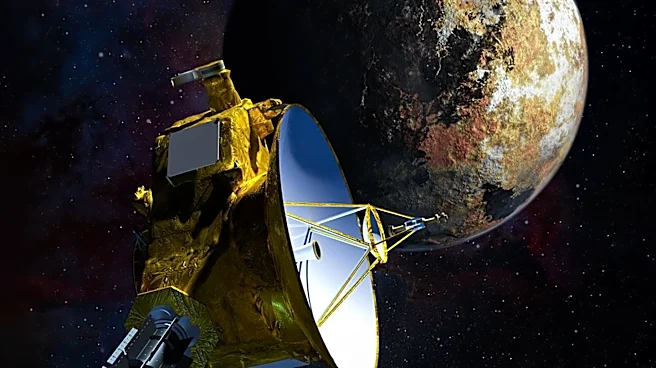
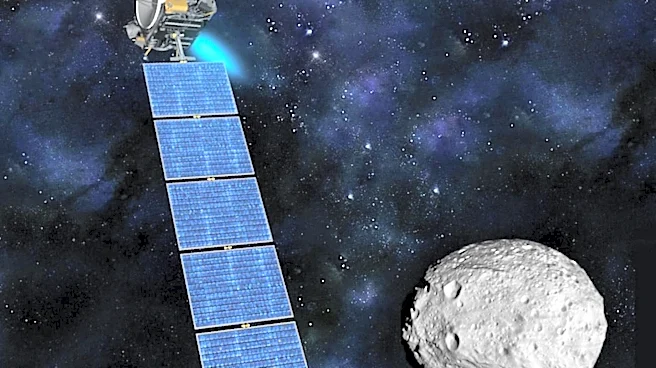
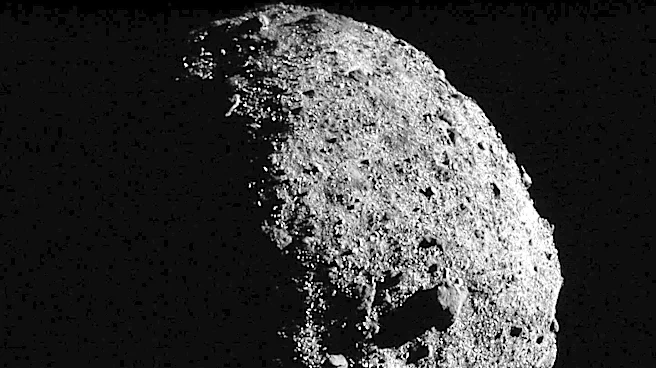
The Japan Aerospace Exploration Agency's (JAXA) Hayabusa2 probe has successfully captured detailed images of the asteroid Torifune during a close flyby. The asteroid, which is part of the Apollo group of near-Earth asteroids, was imaged using Hayabusa2's
optical and mid-infrared cameras. These images reveal variations in surface temperature and texture, providing valuable data for scientists. The flyby was not part of Hayabusa2's original mission, which involved collecting samples from asteroid Ryugu and returning them to Earth. The probe's extended mission now includes studying additional asteroids, with Torifune being one of its targets.
Why It's Important?
The successful imaging of Torifune by Hayabusa2 adds to the growing body of knowledge about near-Earth asteroids. These celestial bodies hold clues to the early solar system's formation and evolution. By studying their composition and behavior, scientists can gain insights into the processes that shaped our planetary neighborhood. The mission also demonstrates the potential for extended space exploration missions, as Hayabusa2 continues to operate effectively beyond its initial objectives. The data collected from Torifune will contribute to future research and exploration efforts, enhancing our understanding of asteroid dynamics and potential resource utilization.
What's Next?
Following the successful flyby of Torifune, JAXA plans to continue analyzing the data collected during the mission. The Hayabusa2 probe is set to continue its journey to another asteroid, 1998 KY26, which it is expected to reach in 2031. This ongoing mission will further enhance our understanding of small celestial bodies and their potential impact on Earth. The data collected from these missions will be crucial for future asteroid exploration and planetary defense strategies.