







What's Happening?
Scientists are investigating nanotechnology as a novel approach to overcome antibiotic resistance, a major global public health challenge. The issue stems from bacteria developing protective mechanisms, such as biofilms, which shield them from antibiotics
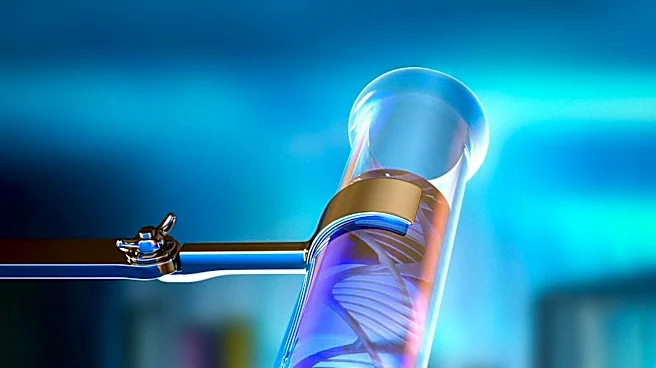
and the body's immune system. Biofilms are sticky layers formed by bacteria that make infections harder to treat, even when the bacteria themselves are not inherently resistant to antibiotics. Nanotechnology involves using extremely tiny structures, called nanoparticles, to deliver medicines directly to these difficult-to-reach bacterial strongholds. This method aims to improve the effectiveness of existing antibiotics by enabling them to penetrate bacterial defenses more precisely, rather than simply increasing dosages, which can lead to further complications. The United States Food and Drug Administration (FDA) has already approved Arikayce, an inhaled antibiotic packaged inside liposomes (a type of nanoparticle), for specific lung infections, demonstrating the potential of this delivery method.
Why It's Important?
Antibiotic resistance is a critical threat, with bacterial resistance directly causing an estimated 1.14 million deaths worldwide in 2021 and contributing to an additional 4.71 million deaths. Projections indicate that without stronger interventions, antibiotic-resistant infections could lead to over 39 million global deaths between 2024 and 2050. The development of nanotechnology-based solutions offers a promising avenue to address this crisis by making current antibiotics more effective and potentially extending their lifespan. This approach could significantly impact healthcare by improving treatment outcomes for persistent infections, reducing mortality rates, and alleviating the burden on healthcare systems. The ability to precisely target bacteria within biofilms could revolutionize how various infections, including persistent wounds and urinary tract infections, are managed, benefiting patients and public health stakeholders.
What's Next?
Researchers are actively exploring ways to combine nanoparticles with substances that can break down bacterial biofilms, such as the enzyme alginate lyase. Laboratory experiments have shown encouraging results when combining these approaches with antibiotics like ciprofloxacin to disrupt biofilms. However, these newer methods are still in experimental stages and require extensive safety testing and clinical trials before they can be routinely used in patients. The future of nanotechnology in combating superbugs hinges on successful clinical translation and regulatory approval. Beyond scientific advancements, public responsibility in antibiotic use remains crucial. Healthcare professionals emphasize that antibiotics should only be taken when prescribed, never shared, and not used for viral infections, to help avert the end of the antibiotic era.
Beyond the Headlines
The rise of antibiotic resistance highlights a fundamental challenge in modern medicine: the evolutionary adaptability of microorganisms versus the pace of drug development. Nanotechnology offers a paradigm shift by focusing not just on new drug discovery, but on optimizing the delivery and efficacy of existing treatments. This approach could have profound ethical and economic implications. Ethically, it raises questions about equitable access to advanced nanomedicines, especially in resource-limited settings where antibiotic resistance is often rampant. Economically, successful nanotechnology applications could reduce healthcare costs associated with prolonged hospital stays and failed treatments for resistant infections. Culturally, it underscores the need for a global shift in how antibiotics are perceived and used, moving towards a more judicious and strategic approach to preserve their effectiveness for future generations.