









What's Happening?
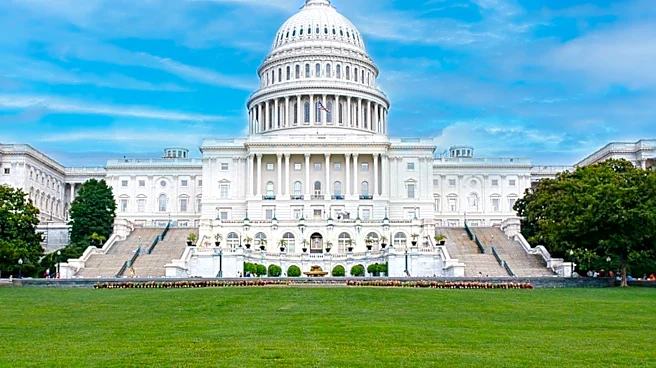
A significant housing bill, the 21st Century ROAD to Housing Act, automatically became law after President Trump chose not to sign it. The legislation, which aims to address the housing affordability crisis in the U.S., includes measures to increase housing supply,
reduce costs, and limit institutional investors from purchasing single-family homes. President Trump refused to sign the bill as a protest against the Senate's inaction on the SAVE America Act, which focuses on voting regulations. Despite his refusal, the bill became law under constitutional provisions that allow a bill to pass if not signed or vetoed within 10 days, excluding Sundays. The bill's passage marks a rare moment of bipartisan agreement, with significant implications for housing policy.
Why It's Important?
The automatic enactment of the 21st Century ROAD to Housing Act is a pivotal moment in U.S. housing policy, addressing long-standing issues of affordability and supply. By limiting corporate purchases of single-family homes and streamlining regulatory processes, the bill aims to make homeownership more accessible to average Americans. This legislation could significantly impact the housing market by encouraging new construction and reducing competition from institutional investors. The bill's passage without the President's signature highlights the complex interplay between legislative priorities and executive actions, particularly in the context of broader political agendas such as the SAVE America Act.
What's Next?
With the bill now law, federal agencies will need to implement its provisions, which could face challenges due to staffing shortages. The focus will be on how effectively these measures can be executed to achieve the intended outcomes of increased housing supply and affordability. Political reactions may vary, with some stakeholders likely to push for further legislative action on related issues, such as voting reforms. The housing market will be closely monitored to assess the bill's impact on prices and availability, with potential adjustments needed based on initial outcomes.